

Choosing a penetration testing tool as an insurer is a risk and compliance decision before it is a tooling one. The right choice depends on how often you ship, which regulations you answer to, and whether the test can reach the authorization logic where insurer breaches actually start. For the regulatory baseline, start with our insurance penetration testing guide.
This guide reviews the market by approach, names the real players in each, and maps them to the compliance regimes insurers care about. It closes on where a code-aware, continuous approach fits and how to run a fair pilot.
What CodeAnt AI solves here: CodeAnt AI is a defensive and offensive security platform that runs continuous, code-aware penetration testing across code, cloud, APIs, and external surface. It chains findings into proven data-leak paths, ships a working proof of concept, and prices on outcomes, charging only for confirmed critical exposure.
I reviewed the current product pages, pricing pages, offering tables, and documentation for each vendor on July 27, 2026. This is a documented capability comparison, not a claim that I ran an assessment against any of these platforms.
What To Look For In Insurance Penetration Testing Tools
Insurers should weigh five things before shortlisting, because a generic web-app test misses most of what puts policyholder data at risk.
Compliance mapping: Findings mapped to NYDFS 23 NYCRR 500, GLBA, SOC 2, the NAIC model law in the evidence format your examiner expects.
Authorization depth: Broken object level authorization on policy and claims APIs is the highest-impact insurer failure, so API penetration testing has to read far enough to reach it.
Continuous cadence: Insurers ship changes to portals and APIs constantly, and a once-a-year test cannot see them.
Evidence quality: A working proof of exploit, severity, remediation, and a retest that confirms the fix, as our pentest retest guide explains.
Multi-tenant coverage: For insurtech platforms, cross-tenant isolation testing is what proves one carrier's data cannot reach another.
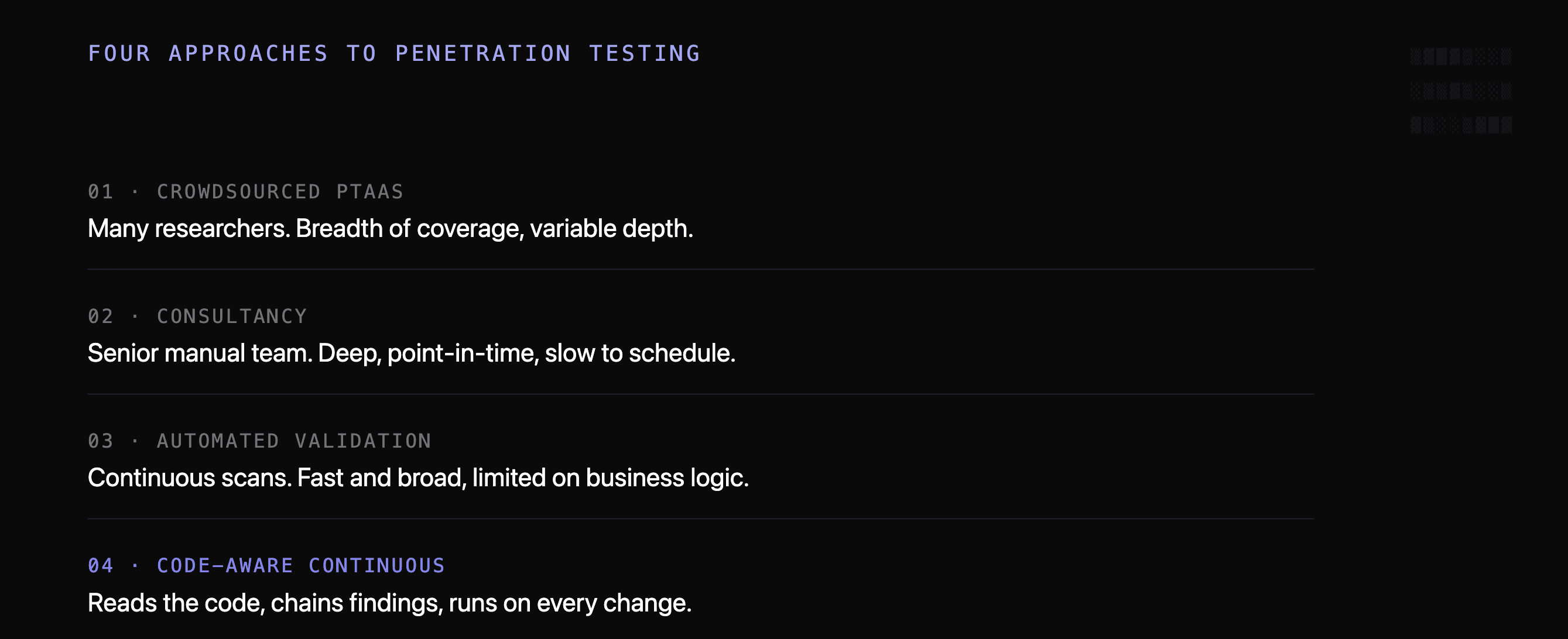
Best Penetration Testing Tools And Providers For Insurance And Insurtech
The market splits into four approaches, and the right one depends on your cadence, your scope, and your compliance load. Here are the strongest options in each, with what they actually do as of mid-2026.
CodeAnt AI, code-aware continuous testing
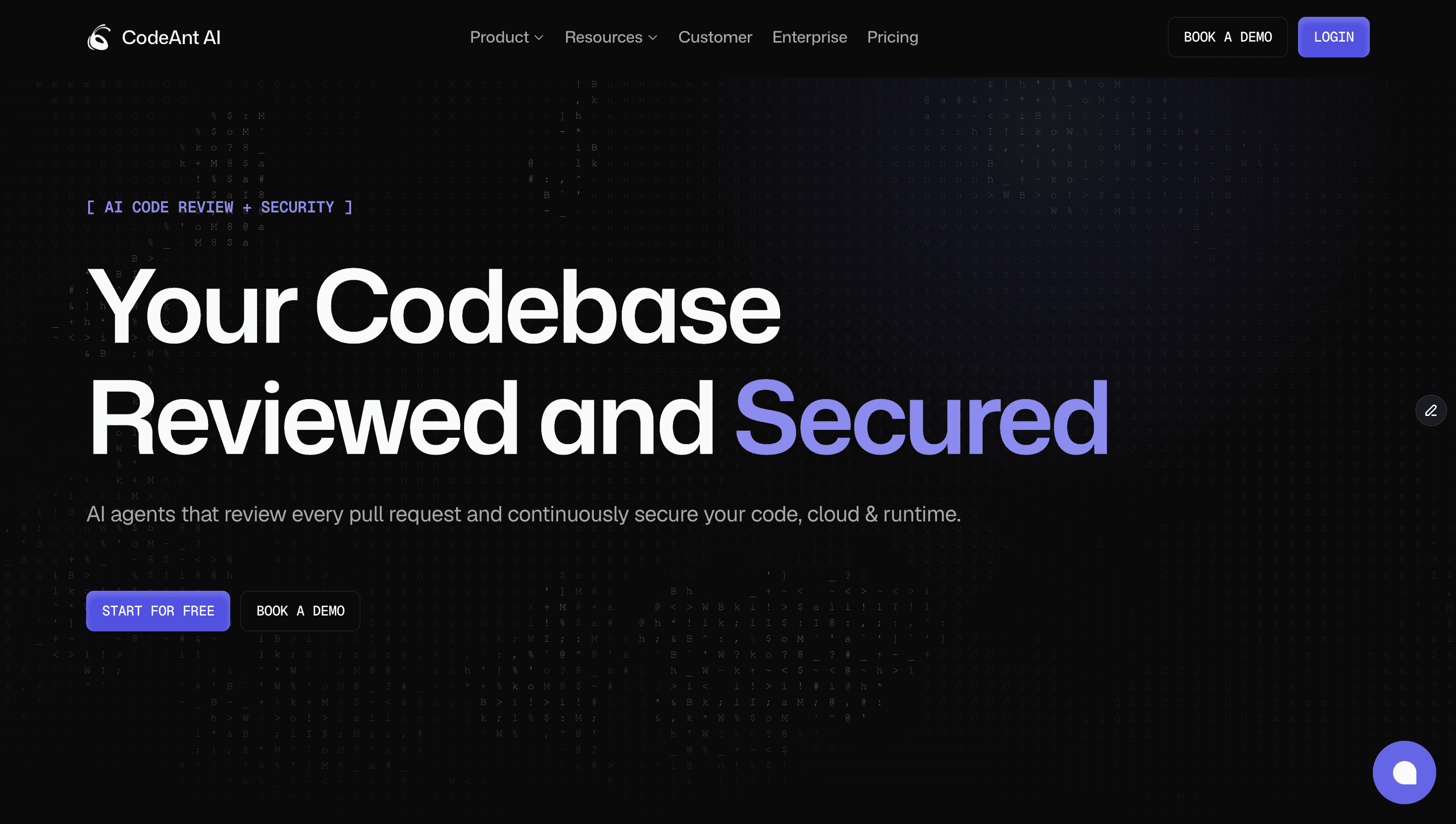
CodeAnt reads your codebase alongside your live surface, which is what lets it find the authorization gaps and cloud misconfigurations that cause insurer breaches. It supports black box, white box, and gray box testing from a URL, repository context, and test identities, and the offensive agents sit beside the same platform's AI code review, SAST, SCA, secrets, and IaC scanning.
Its pentesting page states a full report within 48 hours, a working proof-of-concept exploit on every high or critical finding, and free unlimited re-scans after a fix. That turns the test into an engineering loop rather than a scheduled audit event.
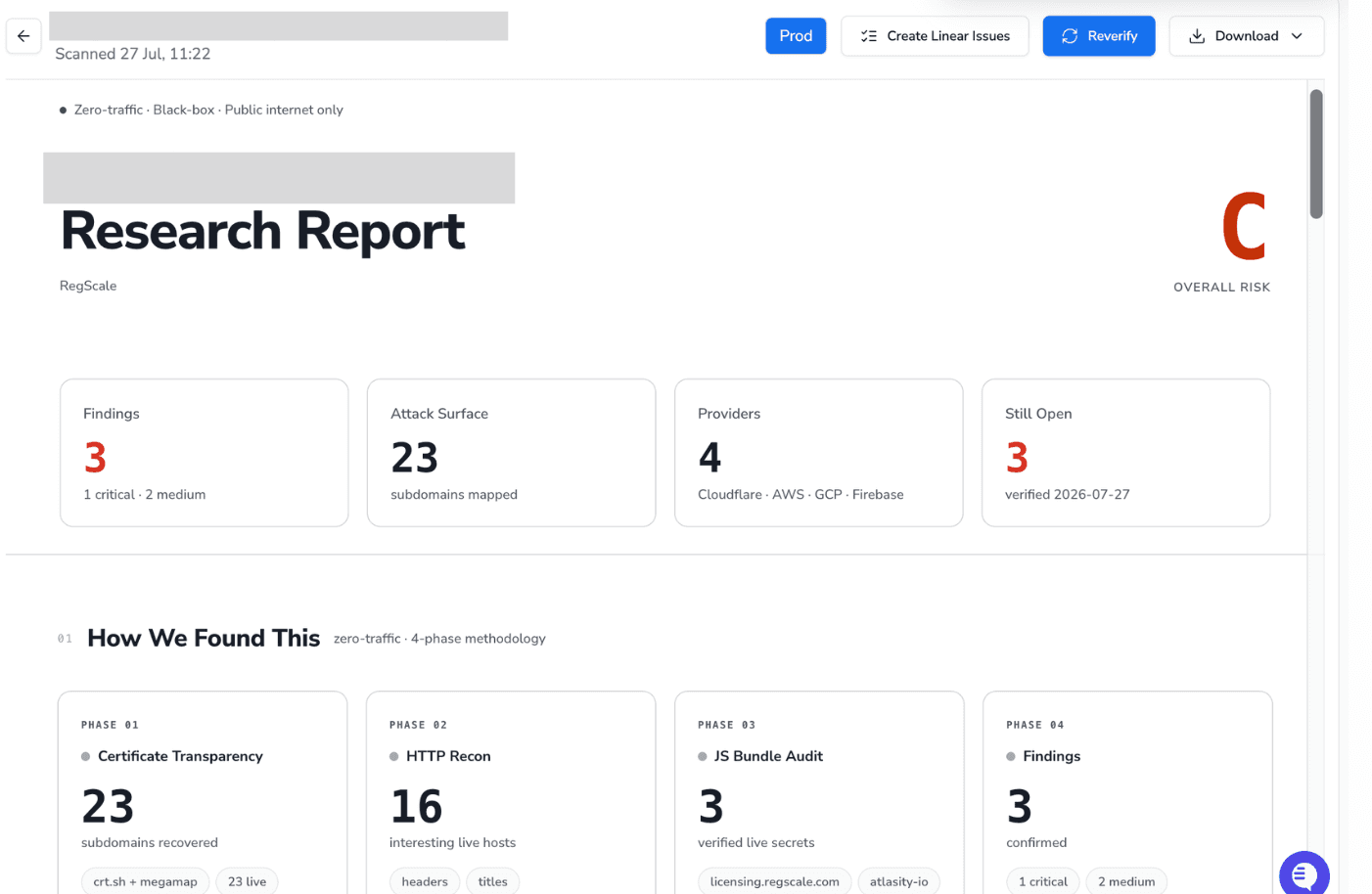
Two things set it apart for insurers. Findings arrive mapped to the control they satisfy, and pricing is outcome-based, a zero engagement fee with payment only when a working high or critical exploit ships.
It fits insurtech platforms and regulated carriers that ship frequently and need audit-ready evidence for NYDFS, GLBA, and SOC 2.
Synack: PTaaS And Vetted Red Team Testing For Insurers
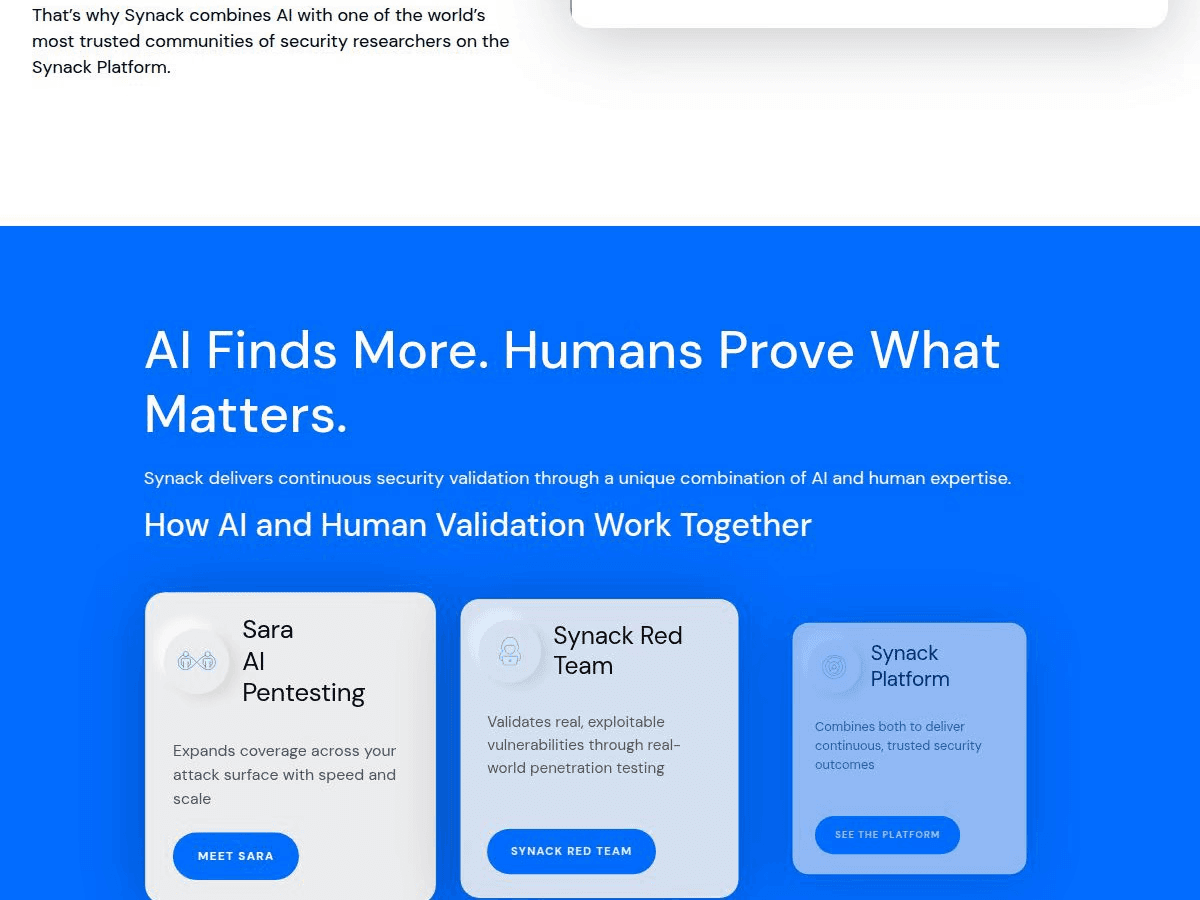
Synack is a penetration-testing-as-a-service platform built around a managed community of more than 1,500 vetted researchers, with an AI agent called Sara that expands discovery and analysis before the red team validates exploitability. It holds FedRAMP Moderate authorization, which matters for insurers with public-sector or government-adjacent lines.
On pricing, Synack's page lists starting prices of 4,181 dollars for one Sara Pentest, 10,283 for one SynackST test, and 27,120 for one Synack14 test, with the required platform as a separate, unpublished line item and credits that expire one year from purchase.
Standard Sara testing is deployed-asset centric rather than repository-native, though a separate source-code-review service exists. The full head-to-head is in the CodeAnt AI vs Synack comparison.
NodeZero by Horizon3.ai: Autonomous Network And Identity Validation For Insurance
NodeZero safely attacks your live network, cloud, Kubernetes, and Active Directory from an assumed-breach position and proves what an attacker could reach. For insurers with significant internal infrastructure and identity exposure, its Active Directory and lateral-movement testing is genuinely strong, and its Rapid Response ships production-safe exploits for fresh CVEs within hours.
The honest limit for insurers is code. NodeZero has no SAST, SCA, secret scanning, or code review, never connects to a repository, and its web-app test reads none of the source behind the running app, and internal tests need a self-hosted host VM.
The full feature breakdown is in our NodeZero features guide, and the head-to-head in the CodeAnt AI vs NodeZero comparison.
Pentera: Automated Security Validation For Insurance Infrastructure
Pentera runs automated, agentless security validation that safely emulates attacks across the internal and external network to prove exploitable exposure. It suits insurers wanting frequent, broad validation of infrastructure without booking a manual engagement each time.
The trade-off is depth on application business logic. Automated validation is strong on known techniques and network exposure, and less suited to the nuanced authorization flaws in a bespoke claims API.
That gap is where pairing it with code-aware testing pays off, and the CodeAnt AI vs Pentera comparison maps the split.
Cobalt: Crowdsourced PTaaS For Insurance Security Teams
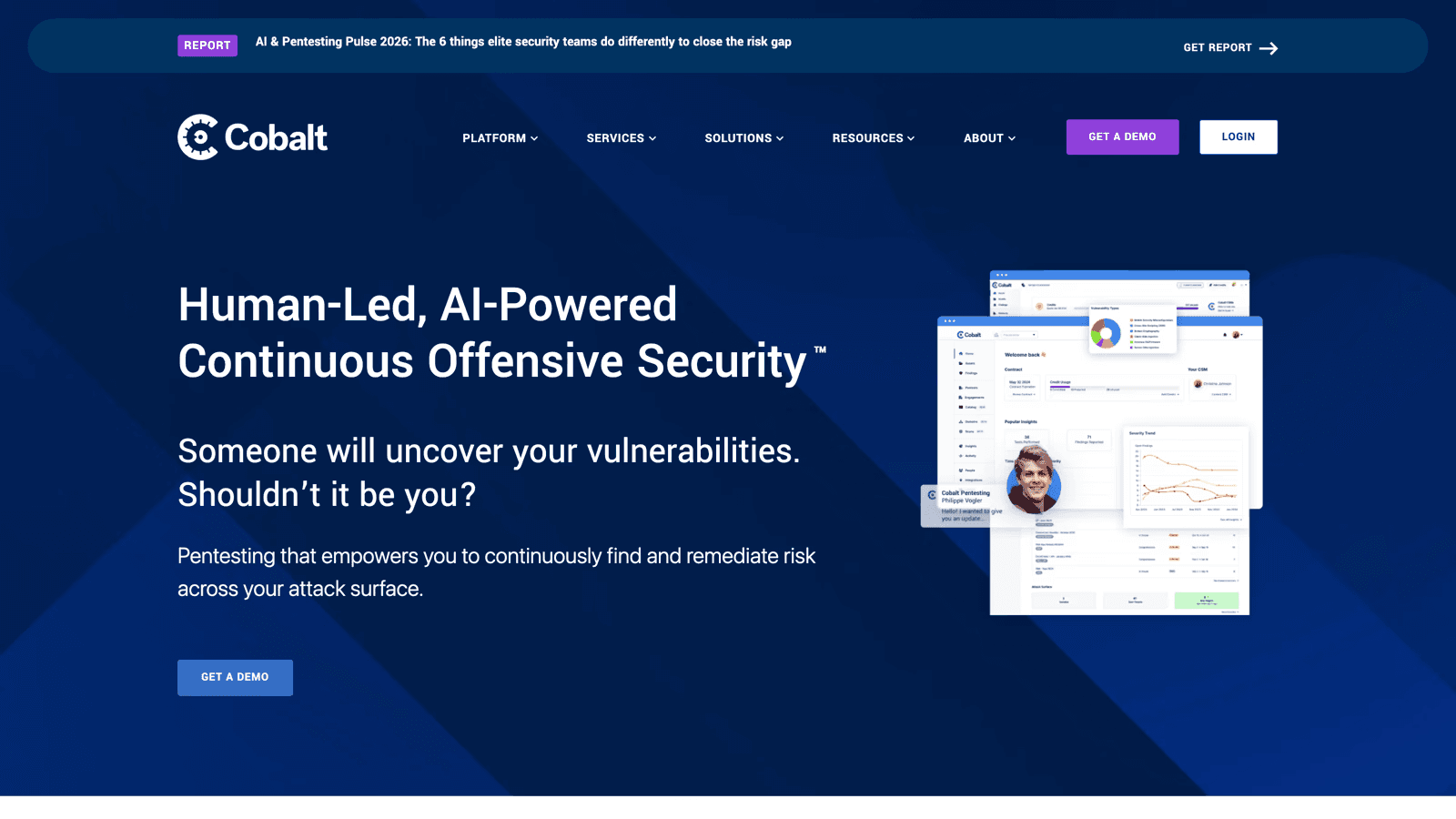
Cobalt runs a platform-managed model with a vetted tester community, fast initiation, and a dashboard for findings and retests. It suits insurers that want broad coverage and quick scheduling without a long procurement cycle.
The trade-off is depth consistency, since the authorization-logic depth on a specific claims API depends on which researchers pick up the engagement. Compliance evidence is available and maps to SOC 2 and similar frameworks.
HackerOne: Crowdsourced Pentesting And Bug Bounty For Insurers
HackerOne pairs a large researcher community with both bug bounty and structured pentest products. For insurers with a mature security program that can triage a steady stream of findings, the breadth of researcher perspective is a real advantage.
Compliance evidence comes through its structured pentest product rather than the open bounty model. It fits organizations wanting continuous external attention across a wide surface.
BreachLock: Hybrid Automated And Manual PTaaS For Insurance
BreachLock blends automated scanning with manual testing on a continuous platform, with transparent pricing and built-in compliance documentation. It suits compliance-driven insurers in PCI, SOC 2, or HIPAA environments that want recurring testing at a price point below the large consultancies.
The hybrid model gives broad, frequent coverage with human validation layered on top. For insurers, that balance can satisfy an annual requirement while keeping cadence higher than a one-off engagement.
Cybri: Compliance-Focused Penetration Testing For Insurance
Cybri is worth naming specifically because it lists NYDFS 23 NYCRR 500 alongside SOC 2, HIPAA, FINRA, and DORA as target frameworks, with a CREST-accredited red team. That regulatory specificity is directly relevant to insurers and rare among general providers.
It fits insurers and insurtech firms that need rapid, compliance-mapped manual testing to clear enterprise security questionnaires and examiner requirements.
NetSPI: Enterprise PTaaS Consultancy For Regulated Insurers
NetSPI delivers manual-first testing through its Resolve platform, with real-time reporting, unlimited retests, and coverage across network, application, cloud, and red team. It is a common choice for large, highly regulated insurers, with findings mapped to SOC 2, PCI, HIPAA, and ISO 27001.
The trade-off is that its enterprise orientation and pricing can exceed what a mid-market insurtech actually needs.
How Insurance Penetration Testing Tools Map To NYDFS, GLBA, And SOC 2
Compliance fit is where the shortlist narrows for most insurers. The table sorts the approaches against what the regulations actually ask for.
Approach | Example tools | Continuous cadence | Authorization-logic depth | Compliance evidence |
|---|---|---|---|---|
Code-aware continuous | CodeAnt AI | Yes, on every change | High, reads the code | Mapped, proof of exploit and retest |
Crowdsourced PTaaS | Cobalt, HackerOne, Synack | Platform-managed | Variable by researcher | Available via pentest product |
Autonomous validation | NodeZero, Pentera | Yes, frequent | Low on app business logic | Broad network and identity proof |
Enterprise consultancy | NetSPI, Cybri | Periodic, platform retests | High, senior manual | Audit-friendly, mapped |
The pattern for insurers is that no single approach wins on every axis. The strongest programs pair continuous, code-aware depth on the application and API layer with broad validation across the network and identity estate, then map both to the frameworks they answer to, as our compliance penetration testing guide explains.
Why Code-Aware Testing Matters For Insurance APIs And Authorization Logic
Two tools can send the same request to a claims API and reach different verdicts. A deployed-target test sees the response.
A code-aware test can also inspect the middleware ordering, the authorization decorator, and the query behind it.
That extra context matters most for exactly the failures that breach insurers. Broken Object Level Authorization and IDOR, tenant isolation failures, and framework misconfiguration all look like a normal 200 response.
An external scan cannot tell the difference, which is why most insurer breaches turn on authorization logic that only code-aware testing reads reliably.
CodeAnt makes repository context a first-class testing mode and connects it to ongoing code review, so the same class of flaw can be caught in the pull request before it reaches the pentest target. The full mechanics are in our penetration testing process guide, and the offensive and defensive halves in the defensive and offensive security breakdown.
Why Pentest Pricing Models Matter For Insurance Companies
For a regulated insurer the pricing unit shapes behavior. Testing paid by the hour, or metered through credits and a platform fee, has no reason to push a finding all the way to a proven exploit.
Outcome-based pricing inverts that. Payment depends on confirming a real, critical, exploitable issue, so a shallow test that stops at a findings list earns nothing, and the incentive aligns with the outcome an insurer wants.
Our penetration testing cost guide and PTaaS explainer show why the billing unit matters more than the first quote.
How To Run A Fair Penetration Testing Tool Pilot As An Insurer
Shortlists lie. A structured pilot exposes the difference between coverage and noise, and it takes less time than a procurement cycle.
Use one approved target. Keep the application, environment, credentials, and test window identical across tools.
Write the answer key first. Document known authorization boundaries, seeded test bugs, expected exclusions, and tenant-ownership rules before testing.
Measure verified findings. Do not rank by alert count. Count reproducible high and critical issues and the time needed to validate each.
Track the remediation loop. Measure time from finding to assigned ticket, merged fix, and confirmed retest.
Price your actual cadence. Model platform fees, credits, findings, seats, and the number of retests you expect across a year, not a single quote.
Read the evidence as an examiner would. Check scope, methodology, exploit proof, control mapping, remediation dates, and retest results against NYDFS and SOC 2 expectations.
The provider evaluation framework gives you a scorecard before the first scan starts. If you are replacing an incumbent, see our penetration testing alternatives for insurers.
Conclusion: Choose Insurance Pentesting Tools Based On Evidence, Depth, And Cadence
The best penetration testing tool for an insurer is the one that matches how you ship and what you must prove. Crowdsourced PTaaS buys breadth, consultancies buy senior depth, autonomous validation buys network and identity proof, and code-aware continuous testing buys depth on the authorization logic where insurer breaches actually start.
For most insurers and insurtech platforms the deciding factors are the same, compliance mapping to NYDFS, GLBA, and SOC 2, depth on APIs and multi-tenant isolation, and a cadence that keeps up with change. Match the tool to those and the shortlist writes itself.
That is where CodeAnt fits, code-aware and continuous, priced on what it proves rather than the hours it takes. Run the free CodeAnt AI pentest against one URL you own, get a report in 48 hours, and pay only when a working high or critical exploit ships.

