

CodeAnt AI and NodeZero both run autonomous AI penetration testing, which is probably why they ended up on the same shortlist. They aim at different layers, though.
CodeAnt reads your source code and tests the app you build. NodeZero attacks the network, identity, and cloud you run. That split decides which one fits your team.
Short answer: Pick CodeAnt AI if you ship web apps and APIs and want code-aware pentesting bundled with AI code review, SAST, and a free way to start. Pick NodeZero if you need to prove how far an attacker moves across your internal network, Active Directory, and cloud.
How We Compared CodeAnt AI and NodeZero
We built this comparison from publicly available sources. NodeZero is sold through a schedule-a-demo sales process with no free self-serve option, so there is no way to try it hands-on first.
Every claim below is drawn from three places:
Official docs and product pages for each platform’s features and capabilities
Live pricing pages for plans, tiers, and what is gated
Verified user reviews on G2, Gartner Peer Insights, and PeerSpot, as of July 2026
What Is CodeAnt AI?
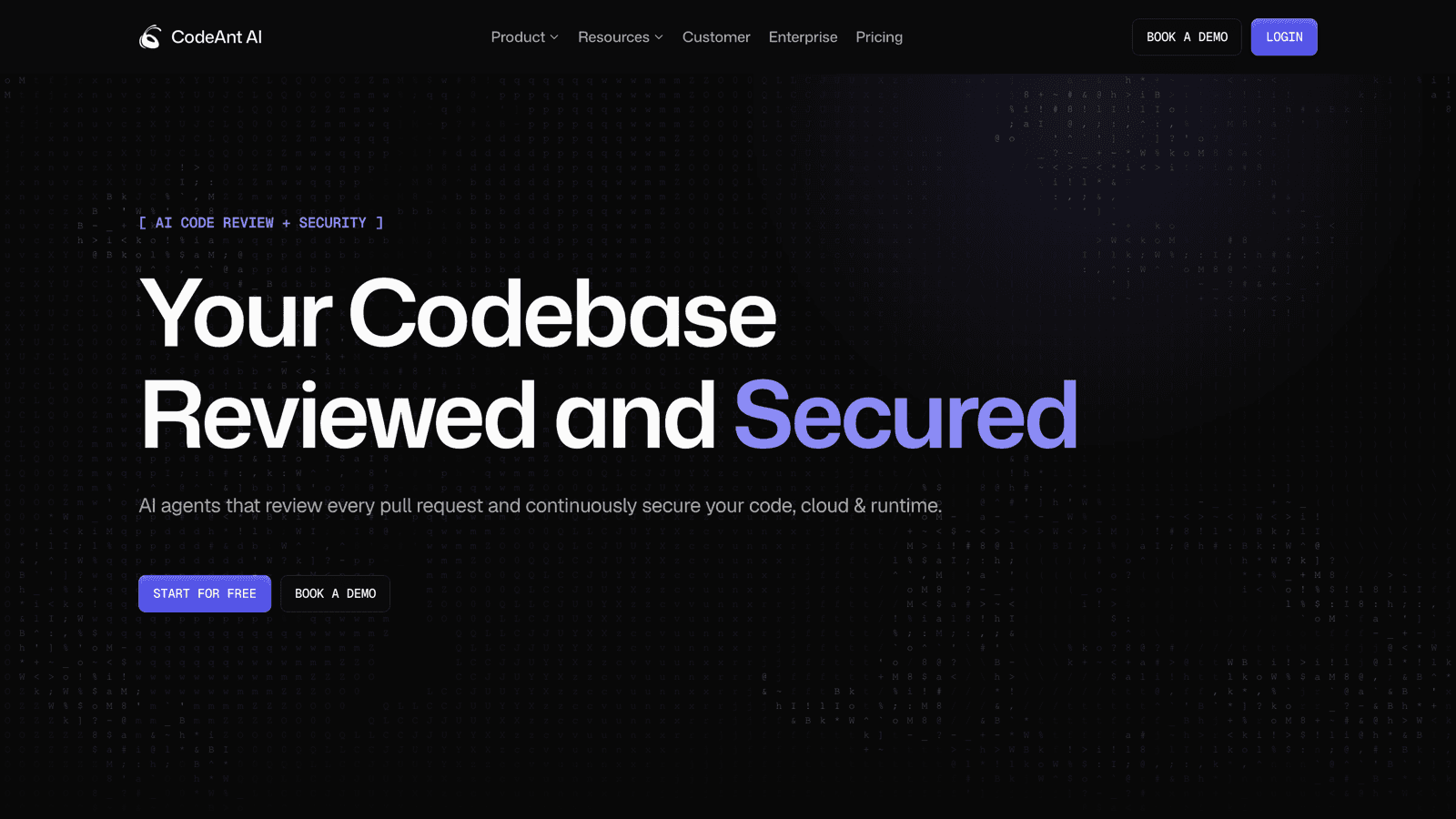
CodeAnt AI is a defensive and offensive security platform that unifies AI code review, SAST, and agentic pen testing. Security is one of four pillars, alongside AI code review, code quality, and engineering metrics.
Its pentest is code-aware. It runs in black, white, and grey box modes and reads your source to find the authorization and logic flaws a network scan cannot see.
What Is NodeZero?
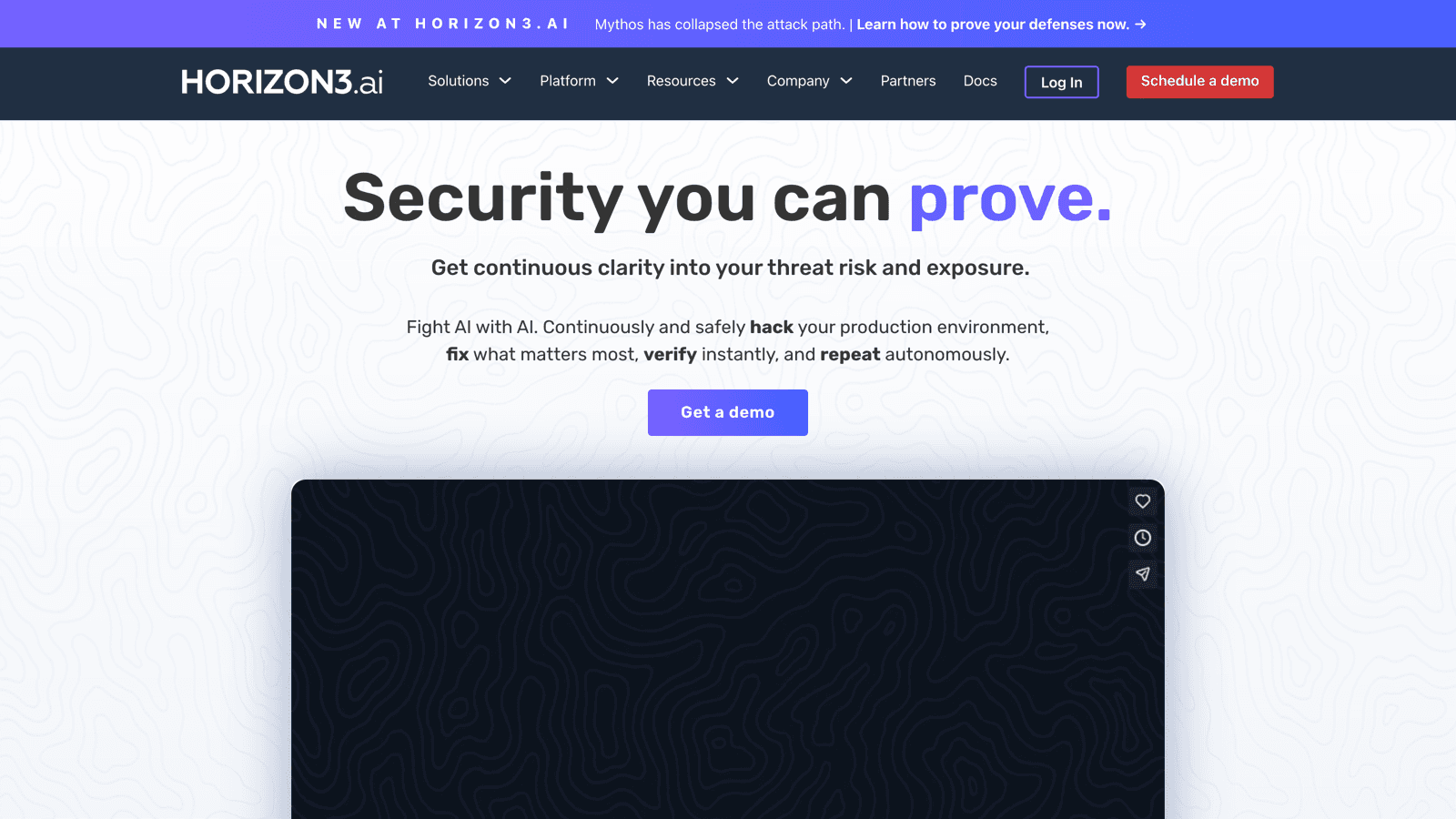
NodeZero, from Horizon3.ai, is an autonomous penetration testing platform for your live environment. Its tagline is “Security you can prove,” and it runs a Hack, Fix, Verify, Repeat loop.
NodeZero never sees your code. It attacks the running network, Active Directory, and cloud from an assumed-breach position, chaining weaknesses into proven attack paths with a working exploit.
CodeAnt AI vs NodeZero: Features
Both are AI pentesting platforms with a shared core, and then they split. CodeAnt AI owns the code and application layer, while NodeZero owns the network and infrastructure layer.
Feature | CodeAnt AI | NodeZero |
|---|---|---|
Autonomous AI pentest with proof of exploit | ✅ | ✅ |
Attack-path chaining | ✅ | ✅ |
Free retest after a fix | ✅ | ✅ |
Cloud security testing | ✅ | ✅ |
Compliance-ready reports | ✅ | ✅ |
Reads your source code (white-box) | ✅ | ❌ |
AI code review on every pull request | ✅ | ❌ |
SAST, SCA, secrets, and IaC scanning | ✅ | ❌ |
Code quality and engineering delivery metrics | ✅ | ❌ |
Free scan and public pricing | ✅ | ❌ |
Internal network and Active Directory pentest | ❌ | ✅ |
Kubernetes pentest | ❌ | ✅ |
Rapid Response for new CVEs | ❌ | ✅ |
Deception, phishing, and EDR validation | ❌ | ✅ |
Federal FedRAMP High authorization | ❌ | ✅ |
Each one still works differently in the two tools. Here is how.
Autonomous AI pentest with proof of exploit
CodeAnt AI: proves a flaw from the code out, exploiting the app or API it just read.
NodeZero: proves it from the outside in, breaking into your live network and pivoting to the target.
Attack-path chaining
CodeAnt AI: the Attack Chains stage strings code-level flaws like IDOR and broken auth into a single exploit.
NodeZero: chains stolen credentials and misconfigurations into lateral movement across the network.
Free retest after a fix
CodeAnt AI: unlimited free re-scans and a Reverify button on every finding.
NodeZero: a 1-click verify to confirm a patch closed the path.
Cloud coverage
CodeAnt AI: reads cloud posture and container config from your IaC, catching misconfigurations before they deploy.
NodeZero: runs a live cloud pentest across AWS, Azure, and Kubernetes, proving what an attacker reaches after they deploy.
Compliance-ready reports
CodeAnt AI: tags each finding with CWE and OWASP IDs, mapped to SOC 2 and VAPT.
NodeZero: a 12-month record for SOC 2, PCI DSS 4.0, CMMC, and the EU DORA regulation, signed off by OSCP-certified testers.
Remediation and ticketing
CodeAnt AI: files Linear and Jira issues straight from the finding.
NodeZero: pushes to Jira and ServiceNow, and adds an MCP server so AI agents can act on the results.
AI agents
CodeAnt AI: runs 500+ exploit agents and ranks findings by EPSS, the odds a flaw gets exploited in the wild.
NodeZero: leans on graph reasoning and scoped GenAI, and says it does not train its own models.
Where CodeAnt AI pulls ahead
CodeAnt covers the entire code-security half of the market that NodeZero does not touch.
Code-aware white-box pentest: reads your source to catch IDOR, BOLA, and auth-bypass flaws a network test misses.
AI code review: inline PR review, PR summaries and chat, plain-English custom rules, and quality gates.
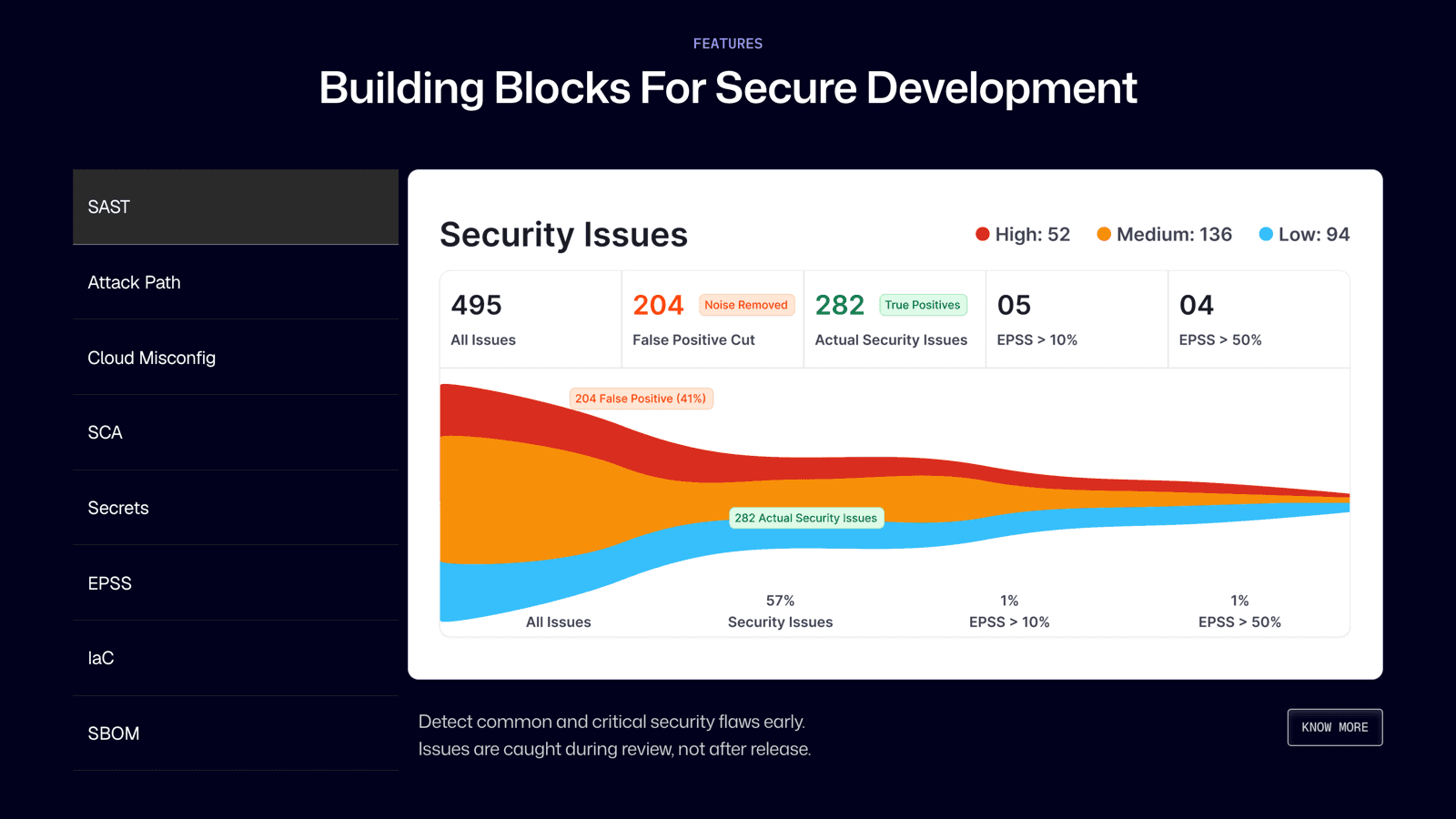
Full application security suite: SAST, SCA, secret scanning, and IaC in one unified report, plus an SBOM.
Code quality: test coverage, complexity analysis, and dead or duplicate-code detection.
DORA delivery metrics: lead time, deployment frequency, change failure rate, and MTTR on one dashboard.
Dev-workflow fit: fix-in-IDE and CI/CD gating, so findings land where you already work.
Free entry, published pricing: a free one-URL scan and per-seat prices you can read without a call.
Where NodeZero pulls ahead
NodeZero goes deep into the running estate, well past where CodeAnt stops.
For a complete breakdown of these capabilities, see our guide to NodeZero features, including its network, identity, Kubernetes, deception, and EDR testing capabilities.
Internal network pentest: assumed-breach lateral movement across on-prem and hybrid networks.
Active Directory testing: AD password audit against breach data, plus AD Tripwire decoys.
Kubernetes pentest: RBAC misconfig, container-escape, and secret-exposure testing on live clusters.
Rapid Response: production-safe exploits for fresh CVEs within hours of disclosure.
Deception (Tripwires): drops honeytokens during a test to catch actual intruders later.
Phishing impact testing: takes a phished credential and maps the blast radius.
EDR validation: Endpoint Security Effectiveness reports whether your endpoint tool blocked, alerted, or missed.
External attack surface: OSINT-based asset discovery with per-asset authorization scoping.
Federal-grade: NodeZero Federal is FedRAMP High authorized and runs the NSA’s autonomous pentest program.
CodeAnt AI vs NodeZero: Pricing
The pricing models are opposites. CodeAnt publishes prices and starts free. NodeZero quotes by demo.
CodeAnt AI pricing
Plan or product | Price | What you get |
|---|---|---|
Free scan | $0, one URL, no card | Black-box pentest scan, low and medium findings always free |
Free trial | 14 days, unlimited seats | 100 PR reviews, all premium features |
AI Code Review | $24 / user / month | Unlimited reviews, dashboards, CI/CD |
Code Security / Code Quality / Engineering Metrics | $20 / user / month each | Per-pillar, buy only what you need |
Pentest | Pay only on high or critical findings | No engagement fee, unlimited free re-scans |
Enterprise | Custom | SSO, audit logs, on-prem or VPC deploy |

NodeZero pricing
Aspect | Detail |
|---|---|
Published price | None, quote by demo only |
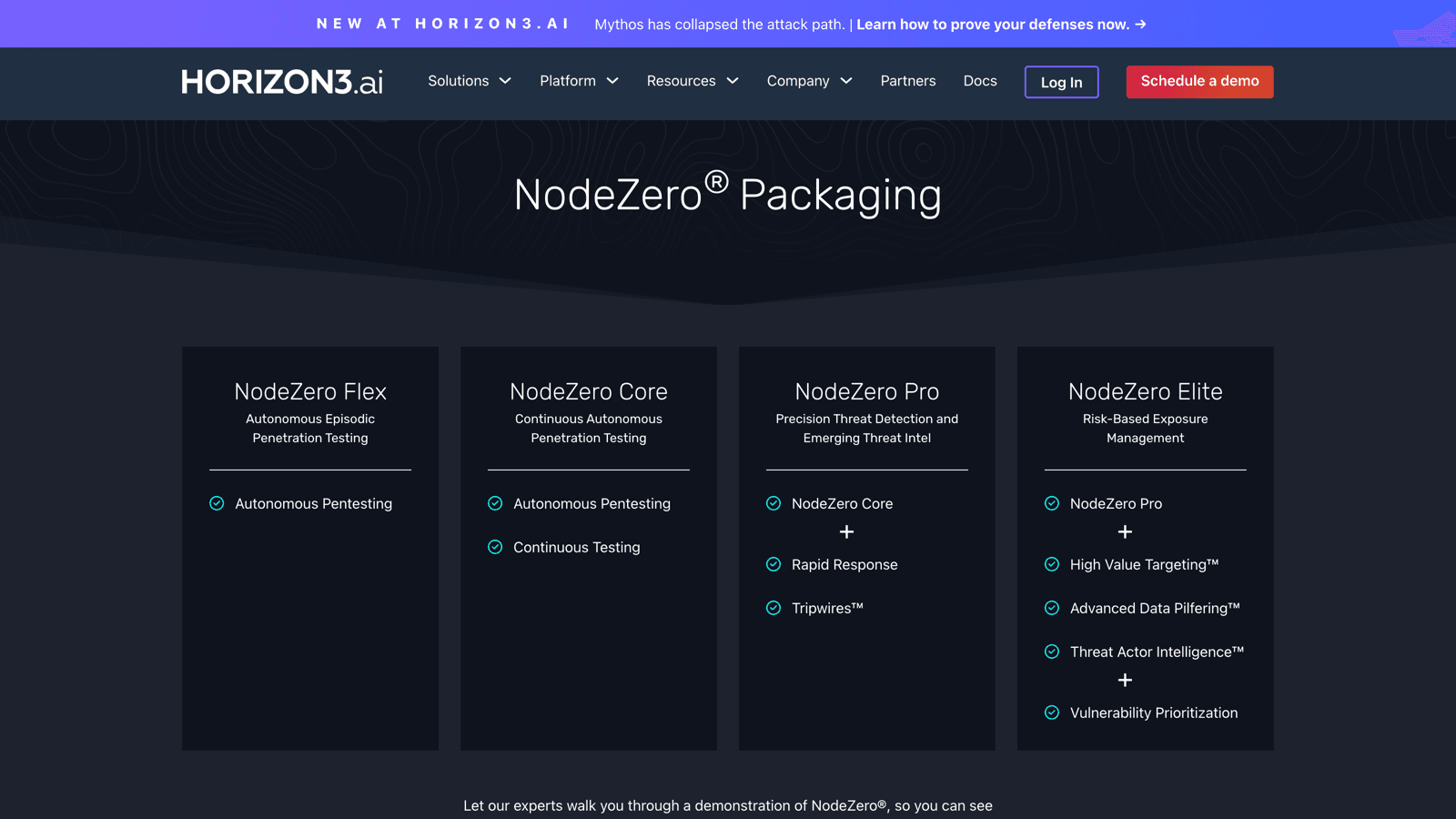
Tiers | Flex, Core, Pro, Elite, each adding to the last |
Free option | 30-day self-serve trial, then read-only. No permanent free tier |
Contract | Subscription, price and term set at quote |
Procurement | Demo request, AWS Marketplace, or a channel partner |
Takeaway: CodeAnt lets you see findings and prices today. NodeZero needs a sales cycle before you see either.
CodeAnt AI vs NodeZero: Reviews and What People Say
Both platforms rate highly across the major review sites. NodeZero has the longer track record, and CodeAnt AI is the newer entrant that rates near-perfect wherever it appears.
Platform | CodeAnt AI | NodeZero |
|---|---|---|
Gartner Peer Insights | ~4.7 / 5 (6 reviews) | 4.7 / 5 (151 reviews) |
G2 | 4.9 / 5 (5 reviews) | 4.8 / 5 (24 reviews) |
PeerSpot | Not yet reviewed | 8.8 / 10 (24 reviews) |
Product Hunt | 5.0 / 5 (4 reviews) | Not listed |
CodeAnt AI reviews
CodeAnt AI rates 4.7 to 5.0 across Gartner, G2, and Product Hunt. Reviewers most often praise the quality of its PR comments, the time saved on review, and its one-click security scans.
NodeZero reviews
NodeZero has the largest sample here, 4.7 out of 5 from 151 Gartner ratings, and a Customers’ Choice badge for adversarial exposure validation. Reviewers value proof of exploitable attack paths, and flag host setup and network-only scope as the sore points.
CodeAnt AI vs NodeZero: Pros and Cons
Every pro below comes from a 4 or 5 star review, and every con from a 1 to 3 star review. Where a platform has no low-star reviews, we say so rather than invent one.
CodeAnt AI pros and cons
Pros (from 4-5 star reviews)
PR feedback quality: “The feedback it provides is highly accurate… pointing out issues with edge cases, missed logic, and naming inconsistencies.” (IT Associate, Gartner)
One-click security scans: “One click scans help us identify security issues… vulnerable packages or secrets embedded deep within the code base.” (Director of IT, Gartner)
Time saved on review: “It has reduced considerable time to review PR and most importantly has reduced a significant amount of minor bugs.” (G2)
Fast value: “A must-have tool for improving code quality.” (Raghavendra Devadiga, Product Hunt)
Cons
CodeAnt AI has no reviews below 4 stars on any platform we checked. The mildest criticisms come from otherwise positive reviews, surfaced in G2’s aggregated feedback:
Suggestions can be over-cautious and over-flag, needing manual tuning. (G2)
Onboarding has a learning curve longer than some reviewers expect. (G2)
NodeZero pros and cons
Pros (from 4-5 star reviews)
Proof it happened: “The proof that what was claimed to have happened actually did happen is what I like most.” (Fabian Brandt, IT Security Consultant, PeerSpot)
Set, scope, and go: “The automated scans are great to use. You set it, scope it, and let it go.” (Brent Hamlin, Infrastructure Manager, PeerSpot)
Sharp prioritization: “Prioritization is really key. It’s a massive differentiator.” (Brian W., Director of IT Security, PeerSpot)
Cons (from 1-3 star reviews)
No app or web testing: the reviewer asks for “a web app testing feature,” since the scope is the network, not the application. (Karrie Westmoreland, Senior Security Engineer, PeerSpot)
Can stray out of scope: “It would find additional servers not in scope. If you are not careful, you can get something not in scope.” (Karrie Westmoreland, PeerSpot)
Heavy host setup: “From a deployment standpoint, NodeZero is a dumpster fire… no one-click deploy option.” (G2)
Reporting limits: “The report could be generated in Spanish. We are from Mexico and we need Spanish reports.” (Francisco Javier V., G2)
CodeAnt AI vs NodeZero: Which One Should You Pick?
Pick CodeAnt AI if you build and ship software. It secures the code and app layer where most of your risk actually lives, bundles AI code review and SAST with the pentest, and lets you prove its value for free before you spend anything.
Pick NodeZero if your exposure is the network an attacker moves through after a breach, across internal systems, Active Directory, and cloud.
You are | Pick | Why |
|---|---|---|
A team shipping web apps and APIs | CodeAnt AI | Code-aware pentest plus AI code review and SAST, free to start |
A startup or lean team adopting AI pentesting | CodeAnt AI | Per-seat pricing and a free scan, no annual commitment |
Securing a large internal network and Active Directory | NodeZero | Assumed-breach lateral movement across the estate |
A federal or defense supplier | NodeZero | FedRAMP High authorization and government pedigree |
Running both app and network programs | Both | CodeAnt for the code, NodeZero for the network |
For most engineering teams, that makes CodeAnt AI the one to start with, and NodeZero the one to add if your program later grows into network and infrastructure testing.
Try CodeAnt AI
CodeAnt AI runs a free scan on one URL and returns a full report. Point it at something you own and read what it finds.

