

Doyensec is a research-led boutique that delivers deep manual application security assessments. It is a strong fit for a periodic audit of a complex target by senior researchers, and a poor fit for teams that ship weekly, need continuous coverage, or want to start pentesting today without a proposal cycle.
This guide covers six Doyensec alternatives worth shortlisting, what each does well, and where each stops. The aim is an honest map for buyers whose cadence or budget does not match the boutique model.
What to look for in an alternative: decide whether you need a scheduled deep audit or continuous coverage, whether your target is an unusual architecture or a standard stack, and whether you can wait weeks for a booking or need results this week. Those three questions separate these six quickly.
Doyensec Alternatives: What You'll Compare
This guide maps six Doyensec alternatives across delivery model, testing depth, cadence, and pricing, then closes with an honest by-use-case verdict.
Doyensec Alternatives Compared: Testing, Pricing & Coverage
The Doyensec alternatives split first on cadence: point-in-time boutique audits versus continuous platforms. The table sets that up.
Alternative | Testing Model | Core Strength | Best For | Pricing Model |
|---|---|---|---|---|
CodeAnt AI | Continuous AI pentesting | Code-aware application security | Teams needing continuous testing | Outcome-based |
Atredis Partners | Boutique research | Bespoke security and hardware research | Unusual or specialist targets | Custom proposal |
Bishop Fox | Managed consultancy | Broad offensive security | Enterprise engagements | Custom SOW |
Cobalt | PtaaS | Human-led penetration testing | Scheduled pentests | Credit-based |
XBOW | Autonomous testing | External web application testing | Fast web app tests | Per test |
NodeZero | Autonomous platform | Internal network validation | Network and lateral-movement testing | Subscription |
The takeaway is that Doyensec's closest peers are the other research boutiques, while the platforms trade some single-target depth for continuous coverage and speed.
The 6 Best Doyensec Alternatives for Penetration Testing
Here is each in detail.
CodeAnt AI

CodeAnt AI is a defensive and offensive platform unifying AI code review, SAST, and agentic pentesting on shared code intelligence. It is the strongest alternative for teams that want Doyensec-style code awareness but continuously.
What it does well: black, white, and gray box testing with code memory, a working exploit per finding, free unlimited retests, and a report mapped to SOC 2 and ISO 27001. It starts from a free scan and prices on outcomes.
Where it stops: on a single unusual target like a bespoke Electron or GraphQL platform, a senior manual researcher can still go deeper on novel logic bugs. CodeAnt closes most of that gap and adds continuous coverage a boutique cannot.
Atredis Partners
Atredis is a worker-owned research boutique, the closest peer to Doyensec on research pedigree.
What it does well: bespoke research engagements, embedded and hardware reverse engineering, and goal-oriented red team work, backed by DARPA grants and a Qualcomm Hall of Fame placement. For an unusual research target, it is a serious choice.
Where it stops: like Doyensec, it is scheduled, point-in-time, and quote-only, run by a small bench. For the direct contrast, see Atredis vs CodeAnt AI.
Bishop Fox
Bishop Fox is a large offensive security consultancy with a broad service catalog.
What it does well: expert-led engagements across web, red team, hardware, and IoT, with a strong research bench. For a board-mandated engagement needing a named team, it fits.
Where it stops: it is a managed service, priced per SOW with no public price, and it is not self-serve. For the contrast, see Bishop Fox vs CodeAnt AI.
Cobalt
Cobalt runs pentest as a service on a credit model.
What it does well: human-led PtaaS with a vetted community and a self-serve platform layer, plus an autonomous option for speed. For scheduled point-in-time tests, it maps cleanly.
Where it stops: the core product is point-in-time per credit, credits can expire, and code-assisted testing is a separate option rather than native gray box. See Cobalt vs CodeAnt AI.
XBOW

XBOW is an AI-native platform for autonomous external web application testing.
What it does well: fast autonomous external web tests with low false positives and published per-test pricing.
Where it stops: web applications only, no source-code analysis, and no defensive loop. It is a fast external test, not a deep code-aware audit.
NodeZero (Horizon3.ai)
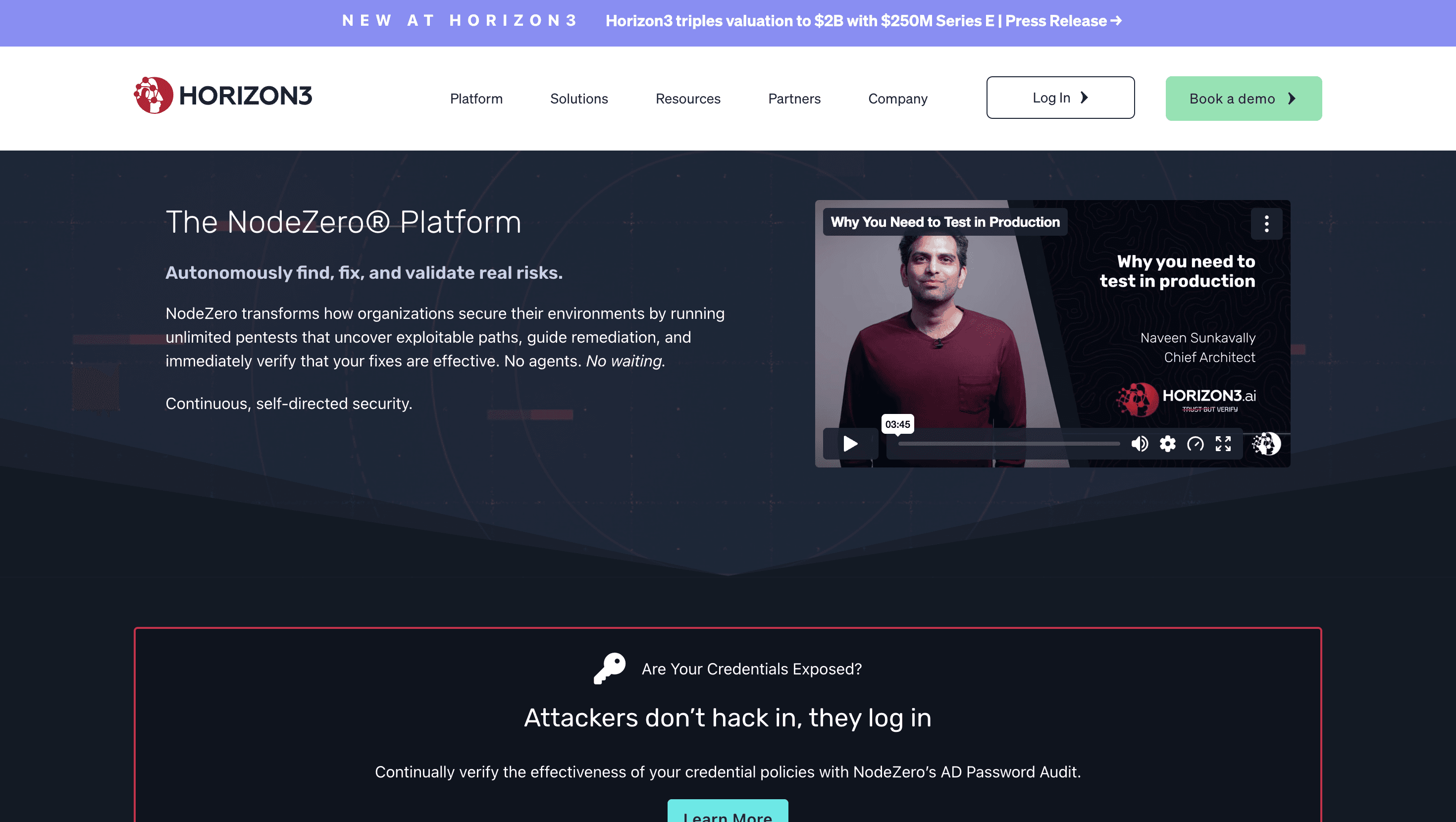
NodeZero is an autonomous platform focused on internal network validation.
What it does well: autonomous network pentesting, credential-abuse simulation, and lateral-movement testing, self-serve.
Where it stops: no source-code analysis and no application-layer gray box. It answers a network question, not an application-logic one.
Best Doyensec Alternative by Use Case
Best alternative for continuous code-aware testing: CodeAnt AI, the only option combining source analysis with continuous coverage and outcome pricing.
Best alternative for bespoke research targets: Atredis Partners for hardware, embedded, and unusual research targets.
Best alternative for a broad managed engagement: Bishop Fox for a named consulting bench across many scopes.
Best alternative for scheduled PtaaS: Cobalt for managed point-in-time testing on a credit model.
Best alternative for a fast external web test: XBOW for autonomous external web testing with low false positives.
Best alternative for teams that want to start today: CodeAnt AI, from a free scan with no proposal cycle.
Which Doyensec Alternative Should You Choose?
The right Doyensec alternative follows your cadence. For a bespoke periodic audit, Atredis or Bishop Fox sit closest. For continuous code-aware testing priced on outcomes, start a free CodeAnt pentest, or read CodeAnt AI vs Doyensec first.

