

The martech deal that dies is rarely lost in the demo. It dies weeks later, in a security review, when procurement asks for a SOC 2 report and a completed questionnaire and the answer is a web page that says the vendor takes security seriously.
That review is more than one document. Procurement sends a security questionnaire that asks directly whether you run penetration tests and to attach your most recent report, and it requests a SOC 2 report whose own controls lean on that same test for evidence.
The penetration test lands on your desk from two directions at once, the questionnaire and the SOC 2 report behind it. That is the line item most martech vendors are missing when a deal stalls.
This guide walks what enterprise procurement actually checks before buying martech, why the penetration test report sits at the center of it, and how to clear the review instead of stalling in it.
What CodeAnt AI solves here: CodeAnt AI produces the verifiable security evidence enterprise buyers ask for, code-aware, continuous penetration testing with a working proof of exploit, mapped to the SOC 2 criteria an auditor and a procurement team both check.
I reviewed current procurement and SOC 2 guidance on July 27, 2026. This is a practical overview, not legal or audit advice.
Why SOC 2 Became The Price Of Admission For Martech Vendors
Enterprise buyers stopped taking security on faith. A SOC 2 Type 2 report is now baseline documentation before a contract, and industry reporting puts the share of organizations mandating SOC 2 or ISO certification from vendors at around 42 percent, with a broader majority requiring some verified proof of compliance.
For a martech vendor, that reframes SOC 2 from a compliance chore into a revenue gate. Even a modest subscription now triggers a vendor security review, and the review adds real time, two to four weeks to the average B2B SaaS sales cycle when the paperwork is not ready.
The cost of not having it is losing deals you never see stall. A slow or empty response signals that the security posture is as disorganized as the process, and the budget cycle can close before the vendor clears review.
What Enterprise Procurement Checks Before Buying Martech
Procurement is not looking for a slogan. It runs a structured review, and the checklist is fairly consistent across enterprise buyers.
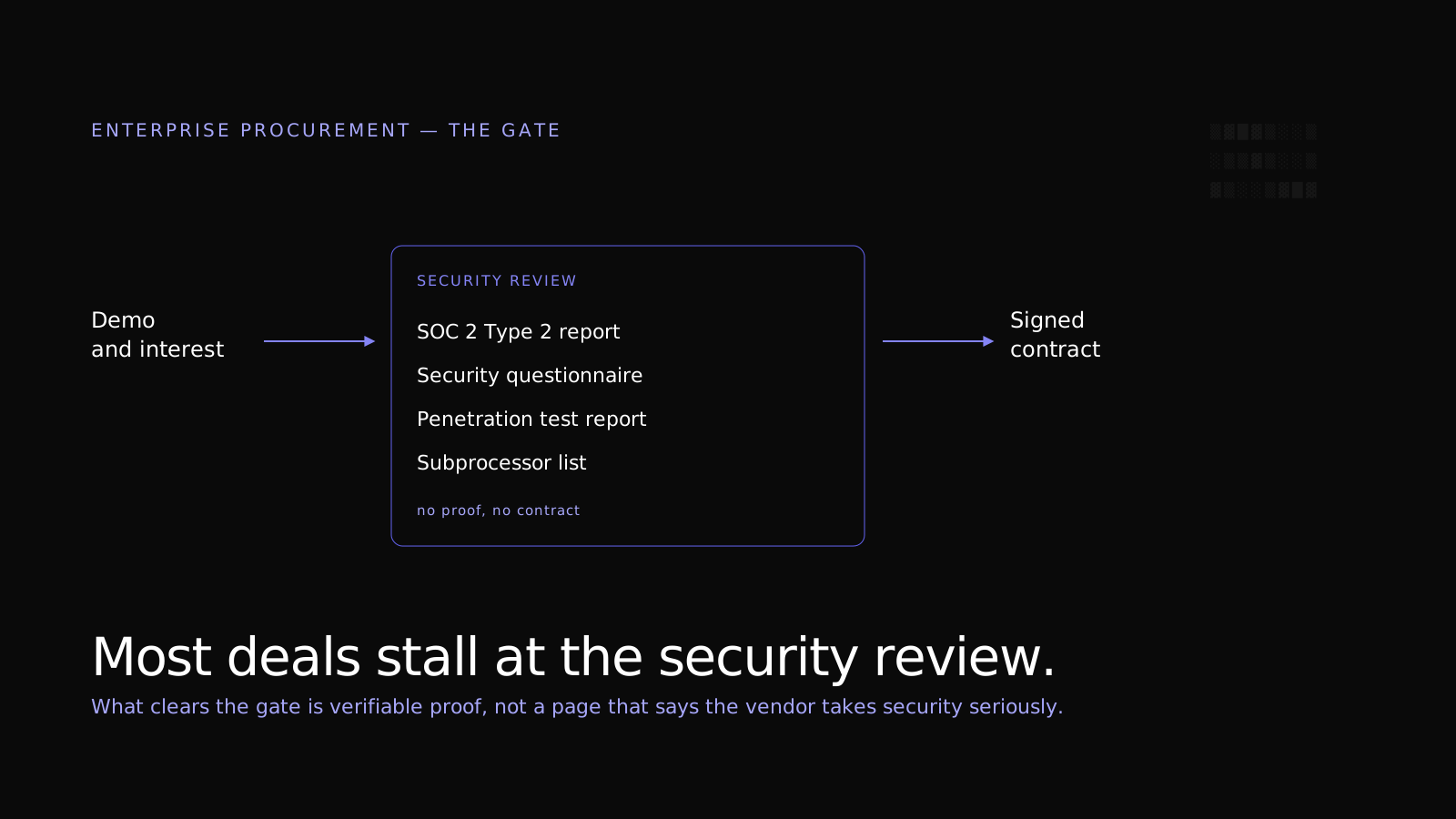
A current SOC 2 Type 2 report. Type 2, not Type 1, because buyers want proof controls operated over a period, not on a single day.
A completed security questionnaire. Usually SIG, CAIQ, or a custom spreadsheet, tied to the AICPA Trust Services Criteria.
A penetration test report. Independent evidence that the controls actually hold under attack.
A subprocessor list and vendor register. Who else touches the data, and how those vendors are reviewed.
Evidence of response readiness. Bridge letters, remediation records, and next-review dates.
The maturity shift matters here. Buyers in 2026 are no longer asking only whether you have SOC 2, they are asking whether the controls genuinely protect their data, which is where the evidence behind the badge starts to decide deals.
How SOC 2 Helps Martech Vendors Answer Security Questionnaires
The questionnaire is the part that consumes a vendor's time. Teams report dedicating 10 to 30 hours per questionnaire and handling 10 to 20 of them a year, across formats like SIG, CAIQ, and VSAQ.
A current SOC 2 Type 2 report is the shortcut, because it answers many of those questions before they are asked and lets procurement review a single document rather than running weeks of back-and-forth. Some buyers now check the CSA STAR registry for a published CAIQ before they even send a questionnaire.
What a report cannot do is answer for controls that do not actually work. That gap becomes visible when a buyer conducts deeper due diligence, which is why the testing evidence behind the report matters as much as the report itself.
Where Penetration Testing Fits In A Martech SOC 2 Review
The Trust Services Criteria never mention penetration testing, yet a pentest report is one of the artifacts procurement and auditors reliably ask for. The reason is structural.
A SOC 2 Type 2 report assesses whether controls operated effectively across a period, commonly six to twelve months, and a penetration test is the accepted way to evidence several criteria, from access control to change management. Our SOC 2 penetration testing requirements guide maps which criteria a test supports, and the insurtech SOC 2 breakdown covers the observation-window logic in depth.
For a martech vendor, the pentest report does double duty. It satisfies the auditor for the report, and it answers the toughest questionnaire items, the ones about whether access controls and vulnerability management genuinely hold, with evidence rather than an assertion.
Why SOC 2 Evidence Beats A Martech Security Page
Here is the shift that decides modern reviews. A certificate proves an audit happened, and a well-worded questionnaire proves someone can describe controls, but neither proves the controls stop an attacker.
Mature buyers now probe that gap directly, asking for evidence that exploitable issues were tested and fixed. A penetration test that ships a working proof of exploit, a remediation record, and a confirming retest answers the question the badge cannot, which is why the testing layer is becoming the real differentiator in procurement.
That is also the line between compliance automation and a real test. A tool that maps policies to controls helps you assemble the report, and a penetration test proves the controls behind it work, and enterprise reviews increasingly want both.
What Martech Platforms Must Prove During Enterprise Security Reviews
Martech carries a specific risk profile, and the review reflects it. These platforms hold concentrated customer data, run multi-tenant architectures, and expose wide APIs, so the questions that matter are about isolation and authorization.
The failure that ends a martech deal is cross-tenant exposure, one customer's records reachable from another's account, usually through broken object level authorization on an API that never checks ownership. A generic scan sees a normal response, while proving the boundary holds takes a test that understands which tenant should own which record.
That is exactly the layer a code-aware test reaches. Reading the application alongside the live surface across black, white, and gray box modes surfaces the authorization and isolation flaws that generic testing misses, which for a martech platform are the flaws most likely to fail a security review or cause a breach.
How Code-Aware Penetration Testing Produces SOC 2 Evidence
The evidence procurement wants is only as current as the testing behind it, and martech platforms ship constantly. A single annual test produces one data point in a twelve-month SOC 2 window, while the platform changes weekly.
Continuous, code-aware testing keeps the evidence live. The full workflow runs reconnaissance, code-aware exploitation, human revalidation, and evidence collection on every change, so the pentest report a buyer asks for reflects the product as it is now, not as it was at last year's audit.
The walkthrough of how AI penetration testing traces a data leak shows the depth.
The pricing model fits a growth-stage martech budget too. Outcome-based pricing means a zero engagement fee with payment only on confirmed critical findings, which keeps continuous coverage affordable while producing the evidence every review demands.
How Martech Vendors Can Get Enterprise Review-Ready
Clearing security reviews is a process, not a scramble at contract time. A few moves make the difference.
Get the SOC 2 Type 2 report, not just Type 1. Buyers want operating effectiveness over a period.
Keep a current penetration test report. Refresh it as the product changes, not once a year.
Build a reusable questionnaire answer bank. Cut response time from days to hours and avoid inconsistency.
Publish a CAIQ where you can. Some buyers check before they even send a questionnaire.
Have evidence the controls work. Proof of exploit and retest answer the questions a badge cannot.
The provider evaluation framework helps you pick a testing partner whose evidence holds up in review.
Conclusion: Use SOC 2 Evidence To Clear Martech Procurement Reviews
For martech vendors, SOC 2 is not just a compliance badge. It is a revenue gate. Enterprise procurement wants to see a current SOC 2 Type 2 report, a completed security questionnaire, a penetration test report, a subprocessor list, and evidence that security controls actually work before the deal moves forward. A security page that says the company takes security seriously is not enough when buyer teams need proof.
The strongest martech teams treat SOC 2 evidence as part of the sales motion. They keep questionnaire answers ready, maintain current subprocessors and vendor records, refresh pentest evidence as the product changes, and show proof of exploit, remediation, and retesting where relevant. That matters because martech platforms often hold concentrated customer data, run multi-tenant systems, and expose APIs where authorization and isolation failures can become deal blockers.
A SOC 2 Type 2 report helps buyers trust that controls operated over time. A code-aware, continuous penetration test helps prove those controls still hold as the product changes. Together, they shorten security review, reduce back-and-forth, and give procurement the evidence needed to move from review to signature.
CTA: Build your martech security review package before procurement asks for it. Keep your SOC 2 Type 2 report, pentest evidence, questionnaire answer bank, subprocessor list, remediation records, and retest proof ready so enterprise buyers can verify your controls without slowing the deal. For the criteria in detail, start with our SOC 2 penetration testing requirements guide.

