

There is no single best Burp Suite alternative because Burp covers more than one job. A pentester may mean the hands-on Proxy, Repeater, Intruder, and Scanner workflow in Burp Suite Professional. An AppSec leader may mean portfolio-wide scanning in Burp Suite DAST. An engineering leader may really be looking for continuous security before and after deployment.
The short answer is this: OWASP ZAP is the closest free all-round alternative; Caido is the strongest modern candidate for hands-on web testing; mitmproxy is best for programmable traffic interception; Nuclei is best for fast template-driven checks; StackHawk and Invicti address automated DAST at different scales; and CodeAnt AI is the best fit when the actual requirement is continuous code-to-runtime security rather than another desktop proxy.
CodeAnt AI is our product, so this article says that plainly. Every product below is evaluated by the workflow it can credibly replace, the workflow it cannot replace, and current first-party documentation accessed in July 2026.
First, Decide Which Burp Workflow You Are Replacing
Burp Suite Professional: the human-led workbench
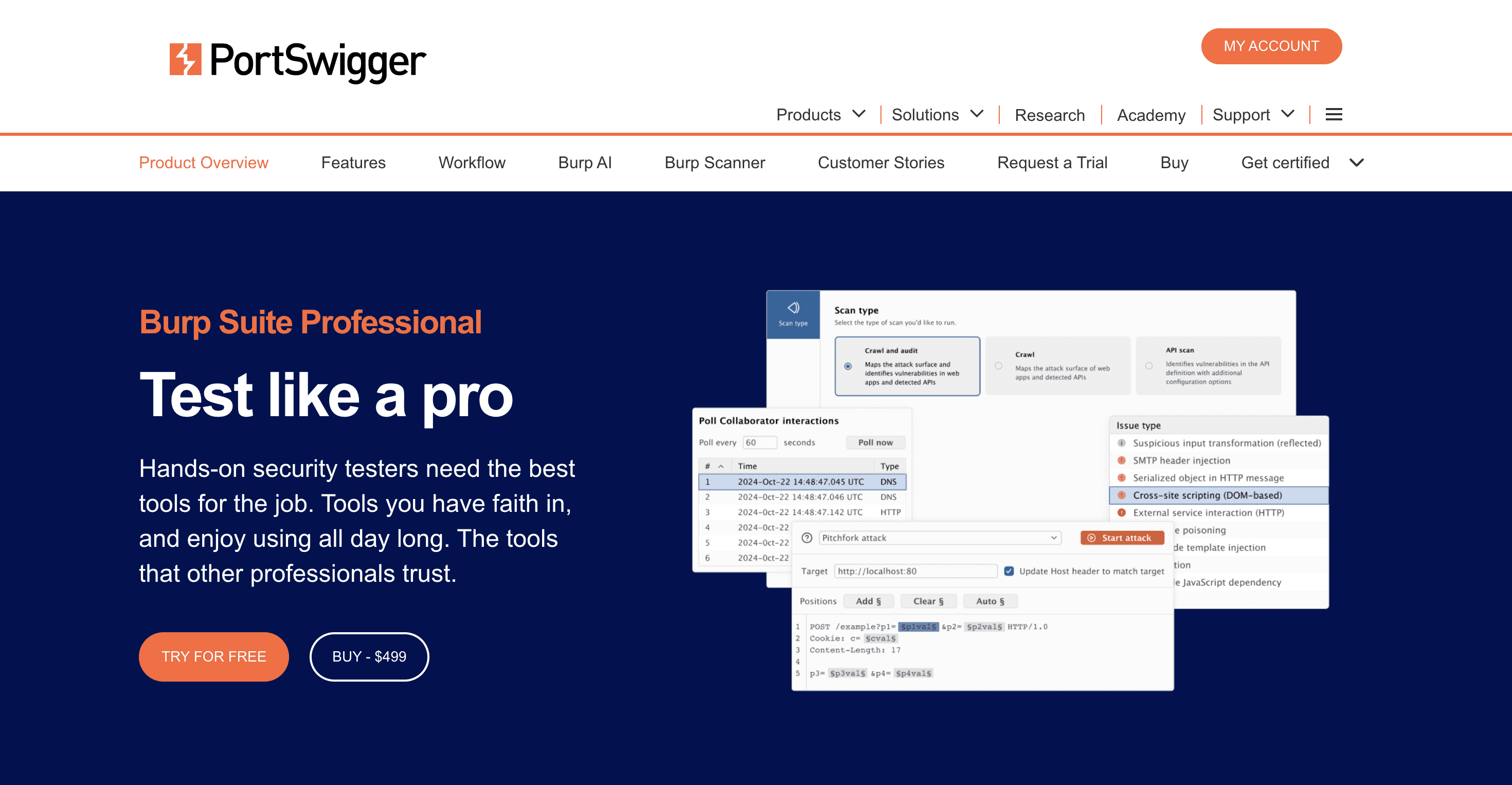
Burp Suite Professional is built for a tester who needs precise control over a running web application. Proxy captures HTTP and WebSocket traffic, Repeater lets the tester reshape and resend requests, Intruder automates payload attacks, Scanner crawls and audits targets, and Collaborator supports out-of-band testing. PortSwigger describes Professional as the granular manual-testing product, even though it also includes substantial automation.
If that interactive loop is the job, compare Burp with ZAP, Caido, or mitmproxy. A CI scanner or code-security platform may be valuable, but it is not the same tool.
Burp Suite DAST: automated scanning at scale
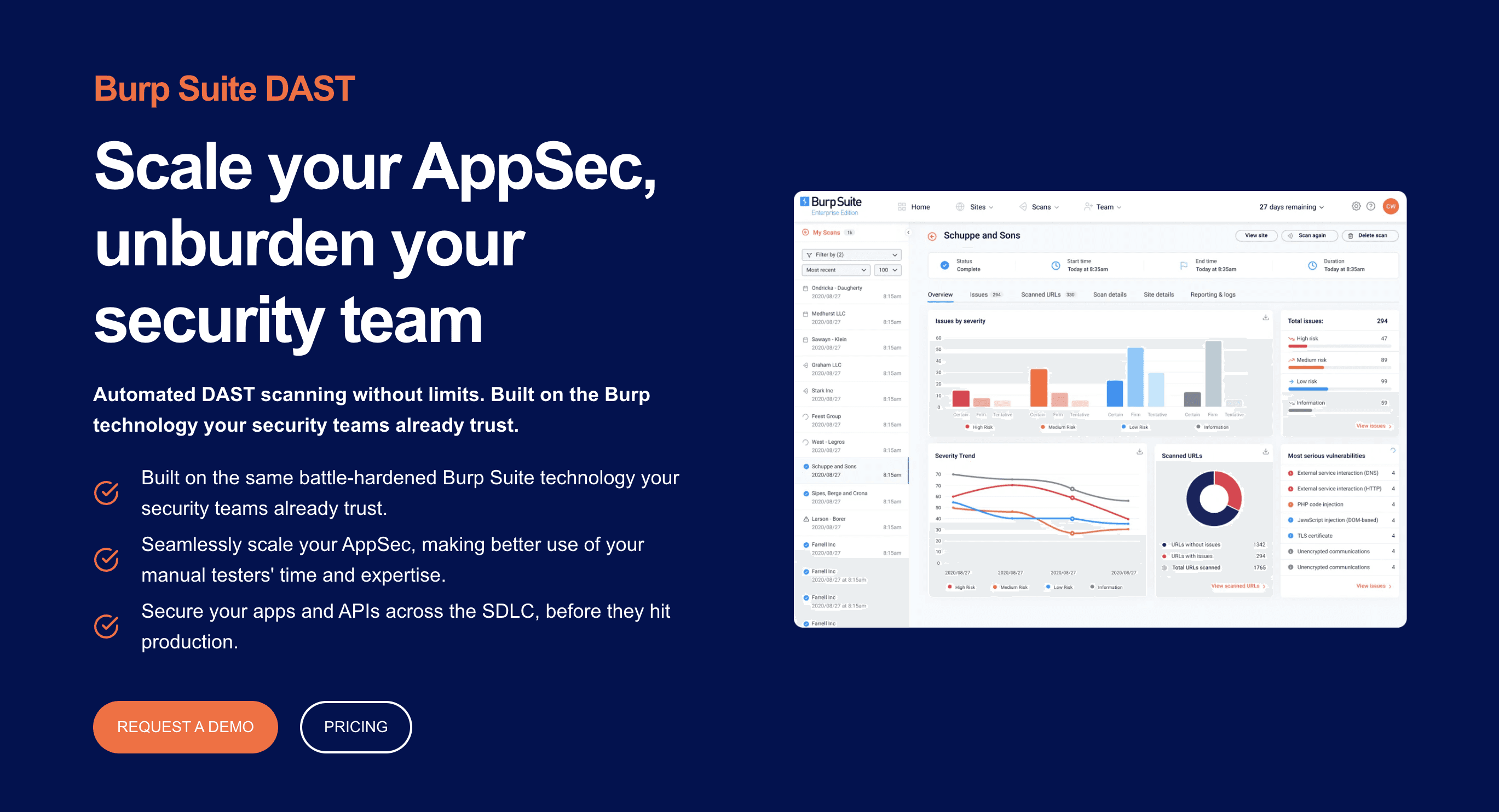
Burp Suite DAST is a separate product for recurring scans across applications, CI-driven testing, dashboards, role controls, SSO, and issue-management integrations. Older material may call it Burp Suite Enterprise Edition. PortSwigger now uses the DAST name and explicitly distinguishes it from the desktop Professional product.
If scheduled web and API scanning is the job, compare Burp DAST with StackHawk, Invicti, ZAP automation, or the offensive layer of a broader platform after a same-target evaluation.
The coverage gap between pentests
Some teams search for a Burp alternative because a consultant runs Burp during an assessment, yet engineering continues shipping code every day. That is a coverage problem, not a proxy-interface problem. It calls for security in pull requests, dependencies, secrets, infrastructure as code, cloud configuration, and the running application. CodeAnt AI belongs in this category.
The 7 Best Burp Suite Alternatives at a Glance
Burp Suite Alternative | Best For | Core Strength | How It Differs From Burp Suite |
|---|---|---|---|
CodeAnt AI | Continuous AppSec and AI pentesting | Code-to-runtime security, agentic pentesting, and CI/CD security | Broader AppSec platform; not a Proxy/Repeater replacement |
OWASP ZAP | Free web security testing | Open-source proxy, active/passive scanning, and automation | Closest free all-round alternative |
Caido | Manual web application testing | Interception, request replay, workflows, and findings | Modern hands-on testing toolkit |
mitmproxy | Programmable traffic interception | HTTP/HTTPS interception with Python scripting | More programmable; not a full pentesting suite |
Acunetix | Automated web application security testing | Automated web and API scanning, crawling, and vulnerability detection | More focused on automated DAST than hands-on proxy testing |
StackHawk | Developer-first DAST | Automated web/API testing in local and CI/CD workflows | Built for developers and CI rather than manual pentesting |
Invicti | Enterprise DAST | Automated web/API scanning, discovery, integrations, and governance | Designed for centralized portfolio-scale scanning |
How We Evaluated These Burp Suite Alternatives
The first criterion is job fit: manual toolkit, automated DAST, or continuous AppSec. We then looked at manual testing depth, crawling and authenticated coverage, API support, CLI and CI automation, developer workflow, source-code context, reproducible evidence, deployment, governance, extensibility, and licensing.
This is a documentation-based comparison, not a vulnerability-count benchmark. Scanner counts are a poor league table unless every product receives the same authenticated target, scope, configuration, time budget, and manual validation. Claims about speed or false positives are treated as vendor claims unless a reproducible independent test supports them.
The Best Burp Suite Alternatives for Web Pentesting in 2026
1. CodeAnt AI: best for continuous code-to-runtime security
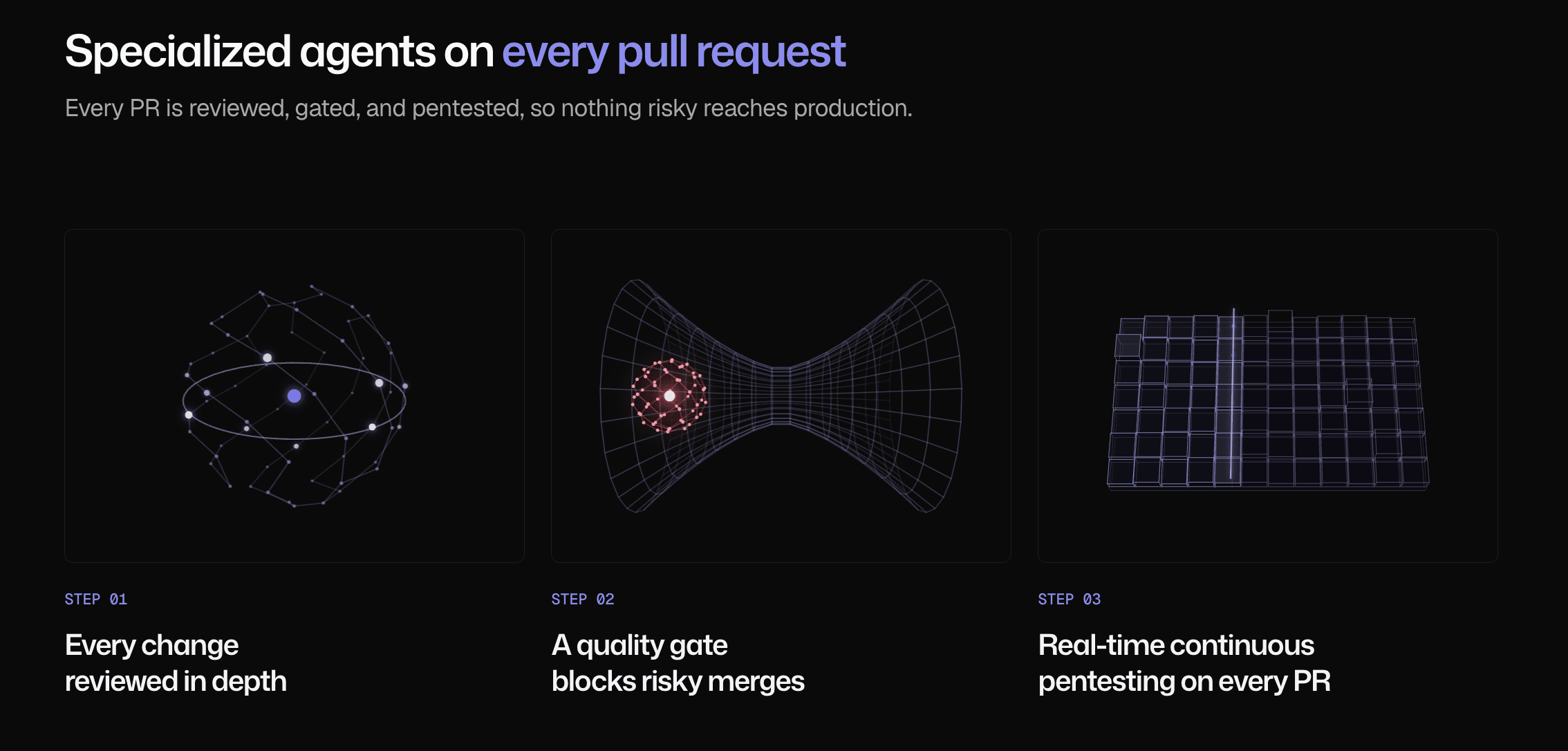
CodeAnt AI approaches application security from both sides of the software lifecycle. Its defensive workflow reviews local changes and pull requests, then covers SAST, software composition analysis, secrets, infrastructure as code, SBOMs, cloud posture, and security gates.
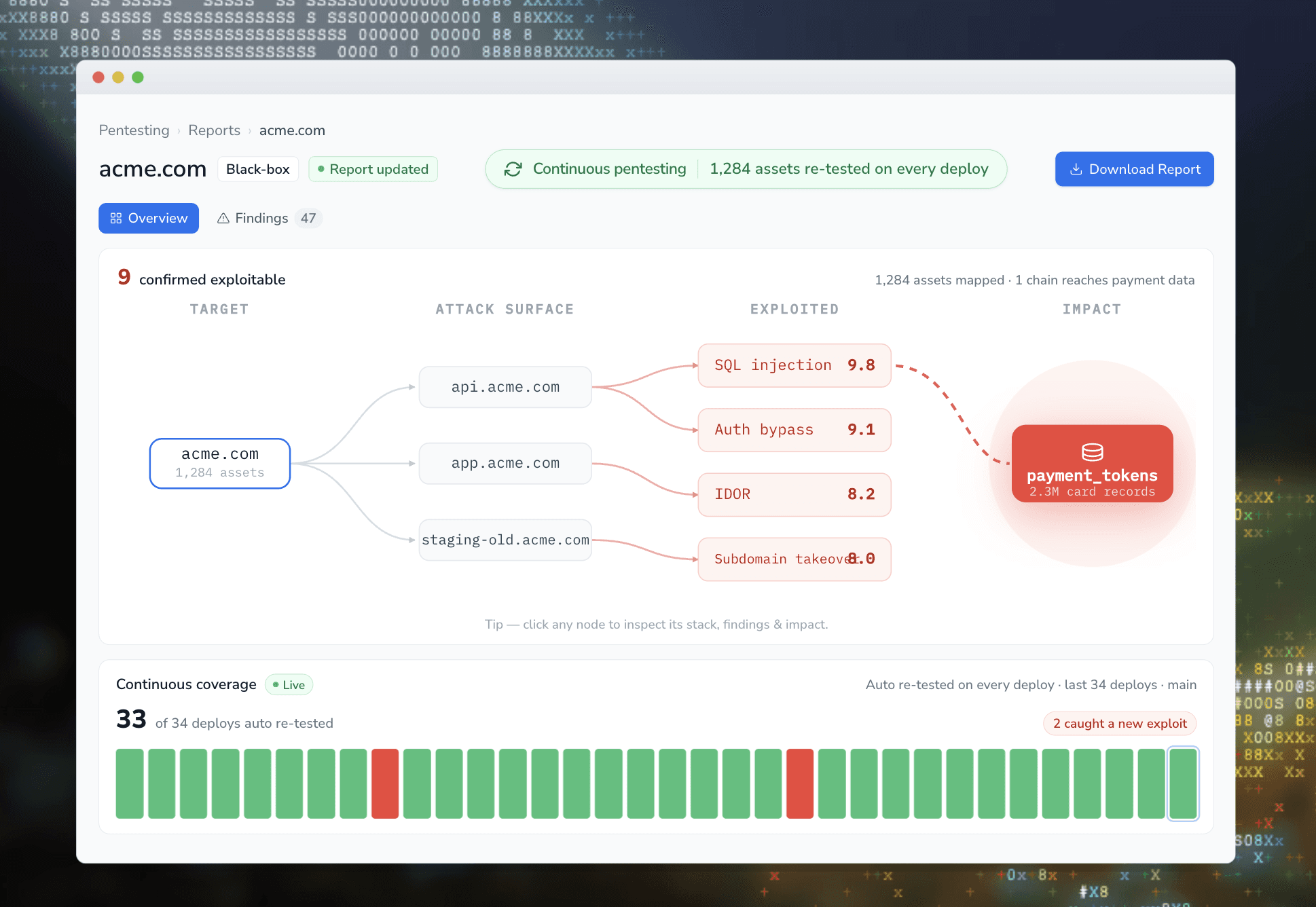
Its offensive workflow maps attack surface and runs agentic penetration testing, with grey-box testing able to use codebase context.
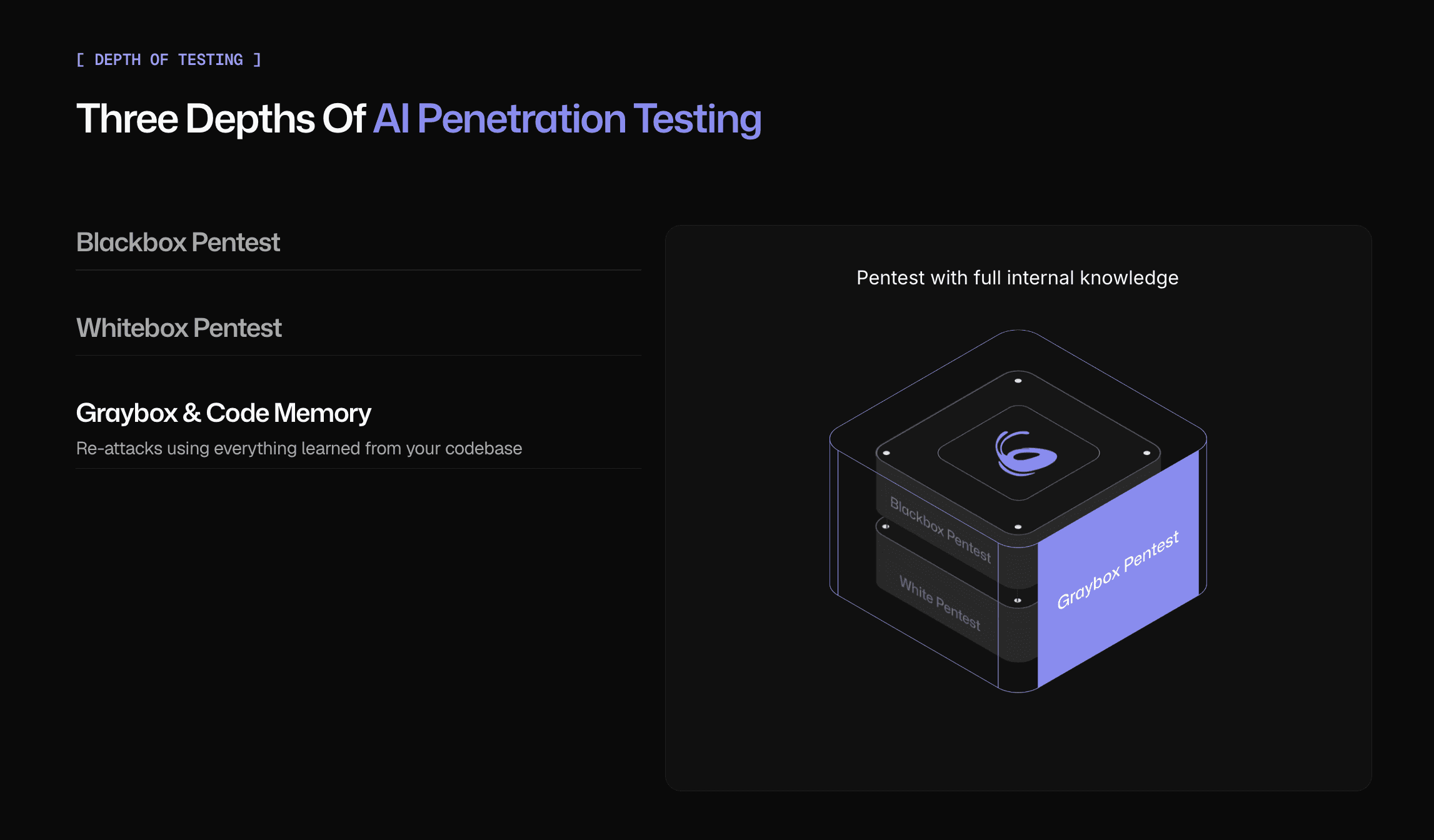
That makes CodeAnt the strongest option here when the buying problem is fragmented coverage. A finding can begin in a pull request, be blocked before merge, be connected to the code that created it, and be re-evaluated after a fix. The product positioning is a complete offensive and defensive security platform rather than a single DAST scanner (https://docs.codeant.ai/ and https://codeant.ai/code-security).
Where it differs from Burp Suite: CodeAnt does not claim a Burp-style desktop interception and request-replay workbench. A pentester who spends the day shaping individual HTTP messages will still want Burp, Caido, or ZAP. Compare CodeAnt against the broader AppSec program outcome, not against every button in Repeater or Intruder.
Choose CodeAnt when security needs to run before merge and after deployment, findings need code context and developer ownership, and the organization wants to consolidate code, dependency, configuration, cloud, and offensive signals. Keep an interactive proxy alongside it when deep manual investigation remains part of the program.
2. OWASP ZAP: best free and open-source all-round alternative
ZAP combines an intercepting proxy with passive scanning, active scanning, spidering, authentication support, API import, add-ons, and headless automation. Its Automation Framework expresses jobs in YAML and can run through Docker or CI, which makes the same basic configuration reproducible outside a tester’s laptop.
It is the most credible zero-cost starting point for teams that need both manual inspection and automated DAST. It is also easier to operationalize in a fully open-source workflow than a named-user commercial desktop product.
Where it differs from Burp Suite: feature parity is not one binary answer. Burp Professional has a mature specialist workflow around Scanner, Collaborator, Intruder, extensions, and PortSwigger research. ZAP has its own add-ons and automation strengths. Test the exact authentication, API, OAST, and reporting flow that matters to your team.
Choose ZAP when budget or open-source control is decisive, when a security engineer can own configuration, and when the team is willing to invest in tuning and automation.
3. Caido: best modern toolkit for hands-on web testing
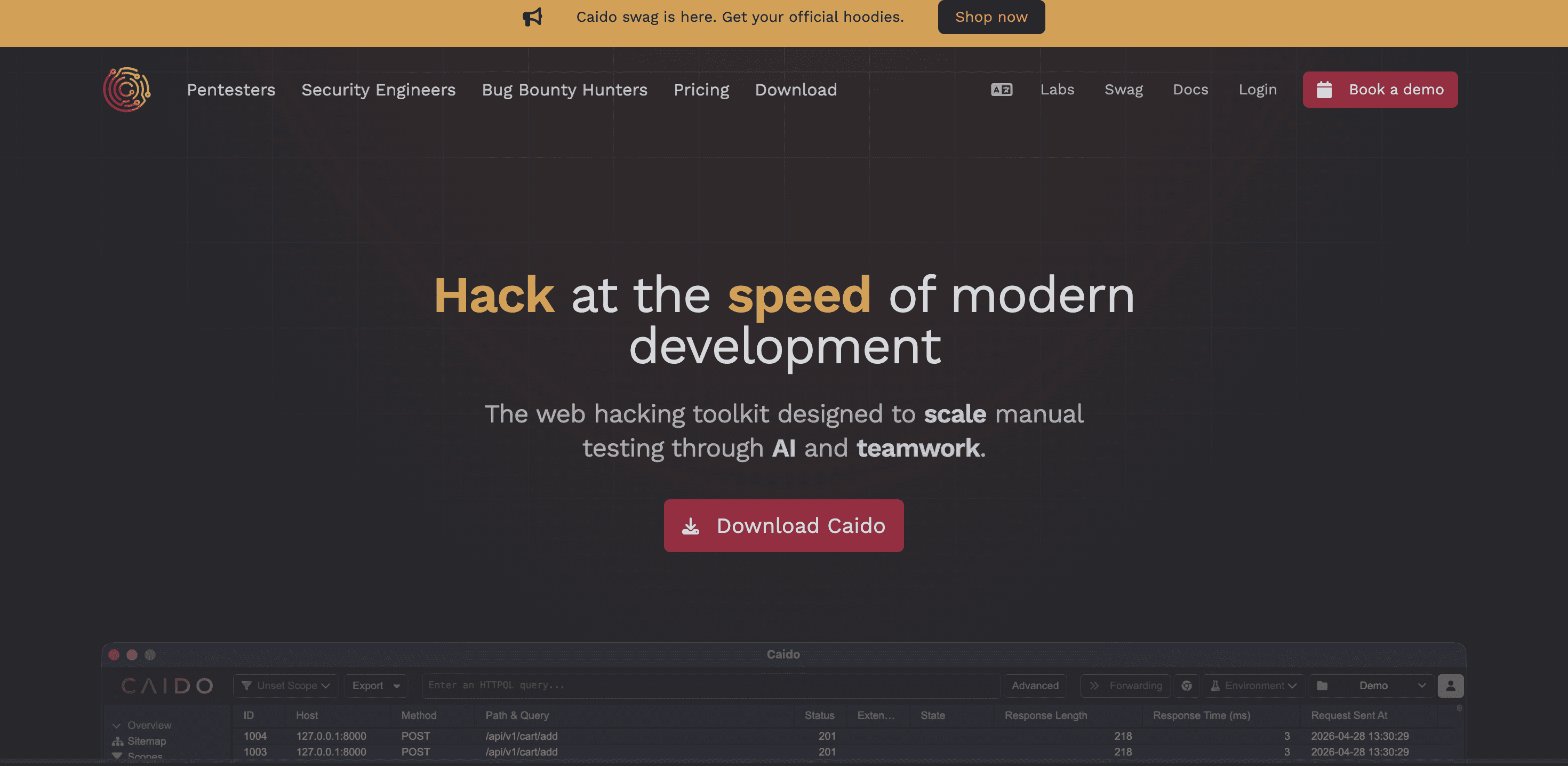
Caido is a security-auditing toolkit centered on traffic interception, HTTP and WebSocket history, Replay, Automate, workflows, search, and findings. Its interface and workflow engine are designed for a fast manual-testing loop, and its documentation includes a Burp migration map that classifies features as available, indirect, or not available.
The honest appeal is ergonomics. Testers who primarily live in intercept, inspect, replay, and custom automation can evaluate a cleaner modern workbench without pretending they are buying portfolio DAST.
Where it differs from Burp Suite: do not assume full Scanner, Collaborator, or BApp parity. Caido’s own migration documentation is the right checklist. It is also not primarily positioned as a centrally governed CI DAST platform.
Choose Caido when the core job is expert-led web testing and the team values a modern interface, collaborative workflows, and extensible automation more than one-to-one parity with every mature Burp feature.
4. mitmproxy: best for programmable traffic interception
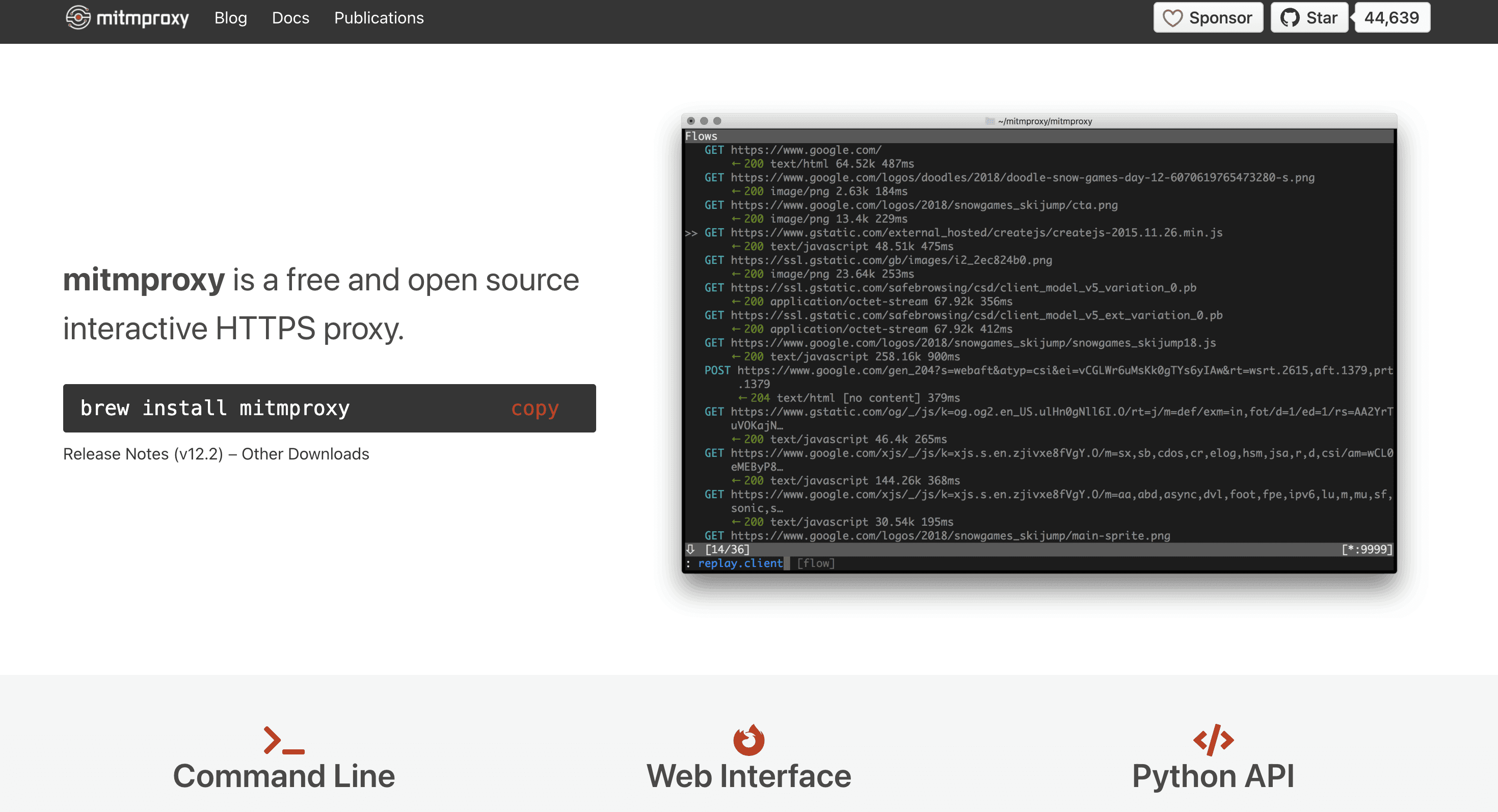
mitmproxy provides an interactive console, a browser-based interface, a command-line capture tool, and a Python scripting API for HTTP traffic. It is especially useful when the goal is to observe or transform traffic as code, automate test conditions, or embed interception into development and research tooling.
Its strength is programmability rather than a packaged pentesting suite. A developer can write an add-on to rewrite requests, simulate failures, extract data, or build custom traffic analysis without adopting a large desktop workbench.
Where it differs from Burp Suite: mitmproxy is not an integrated web vulnerability scanner and does not reproduce Burp’s combined Target, Scanner, Intruder, Collaborator, and reporting workflow.
Choose mitmproxy when interception is an input to your own automation and Python is a feature, not a barrier.
5. StackHawk: best developer-first DAST for CI/CD
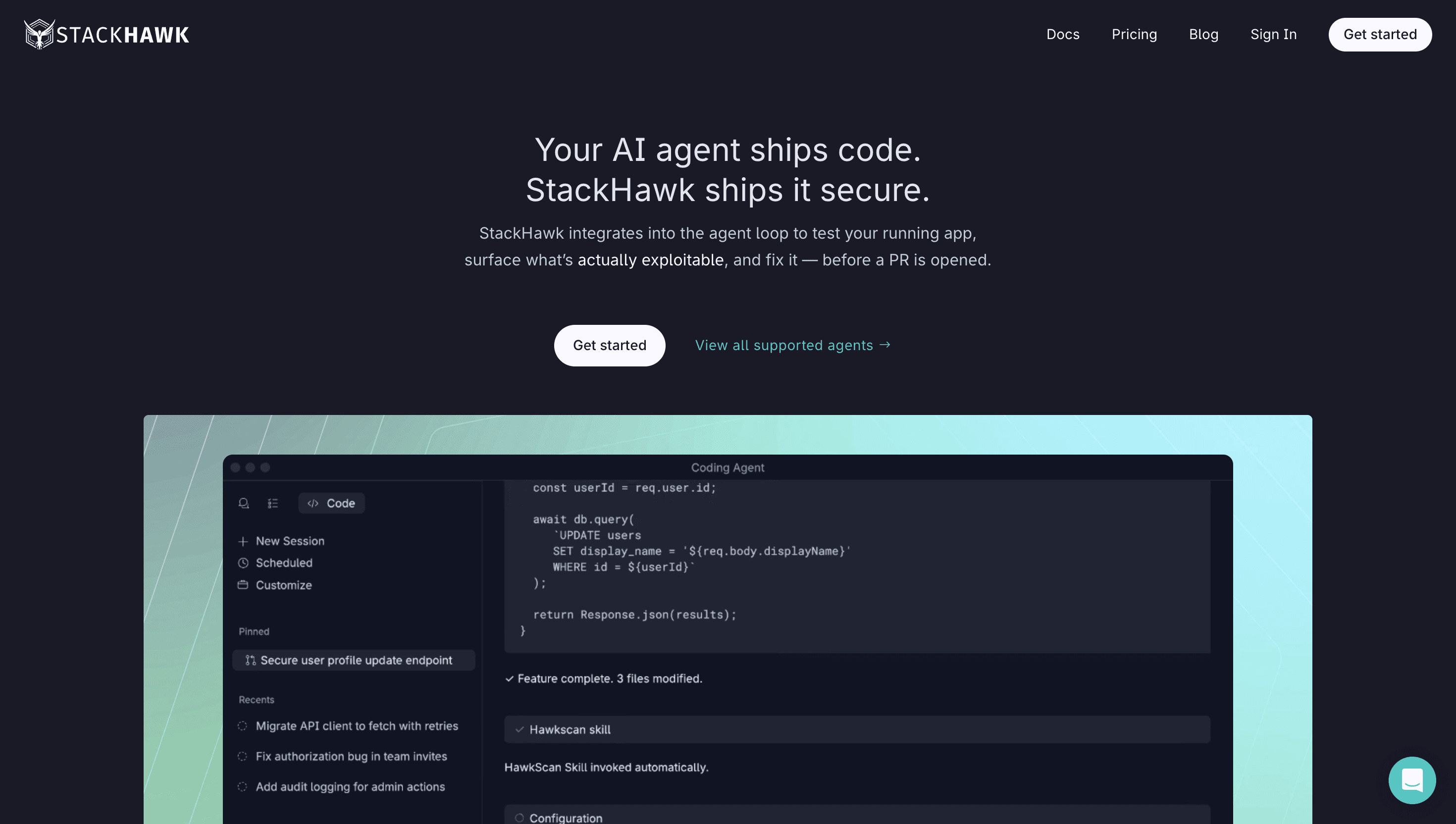
StackHawk is designed to scan a running web application or API from the developer workflow. Its documentation covers local and CI execution, authenticated scanning, API discovery, configuration-as-code, and custom business-logic tests.
The operating model is the differentiator: engineering teams can run dynamic checks closer to the build rather than waiting for a centralized scanner or a scheduled assessment.
Where it differs from Burp Suite: StackHawk is not a desktop Proxy-Repeater-Intruder workbench for a pentester. It is a developer DAST product. It also does not by itself replace a full source, dependency, secrets, IaC, and cloud-security stack.
Choose StackHawk when the specific requirement is repeatable authenticated web or API DAST in development and CI.
6. Invicti: best for enterprise-scale automated DAST
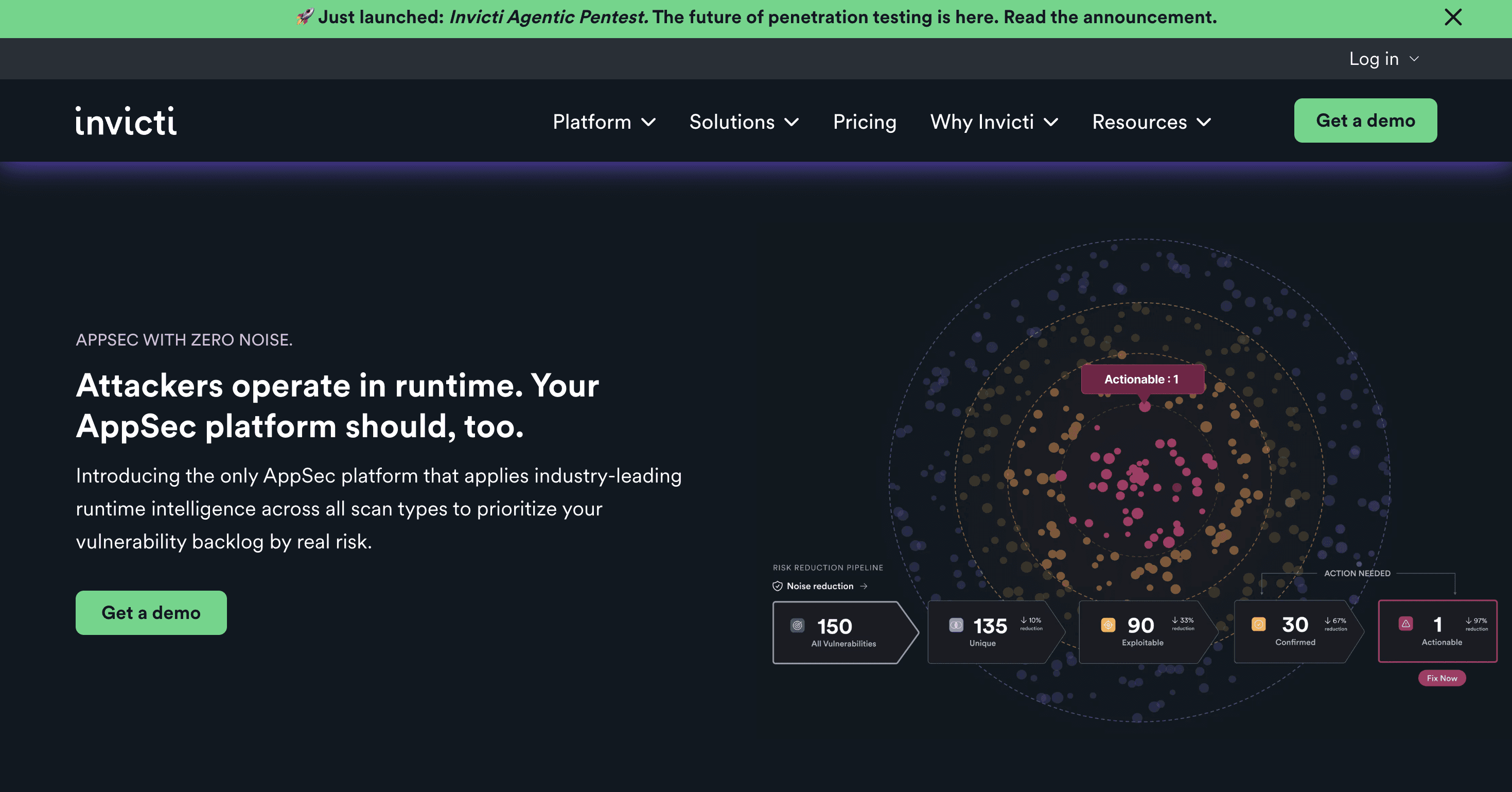
Invicti targets centralized scanning of web applications and APIs, with discovery, integrations, dashboards, access controls, and automation for larger application portfolios. Its Proof-Based Scanning capability is a vendor-documented mechanism that attempts to verify selected findings automatically.
The enterprise case is operational: many assets, many teams, governance requirements, and a need to route findings into existing vulnerability-management and ticketing systems.
Where it differs from Burp Suite: Invicti is not a hands-on proxy toolkit, and its quote-based platform economics suit a different buyer. Proof-Based Scanning should not be translated into an uncited claim that it universally produces fewer false positives than Burp.
Choose Invicti when centralized automated web and API scanning is the job and the organization is prepared for an enterprise procurement and deployment process.
7. Acunetix: Best for Automated Web Application Security Testing
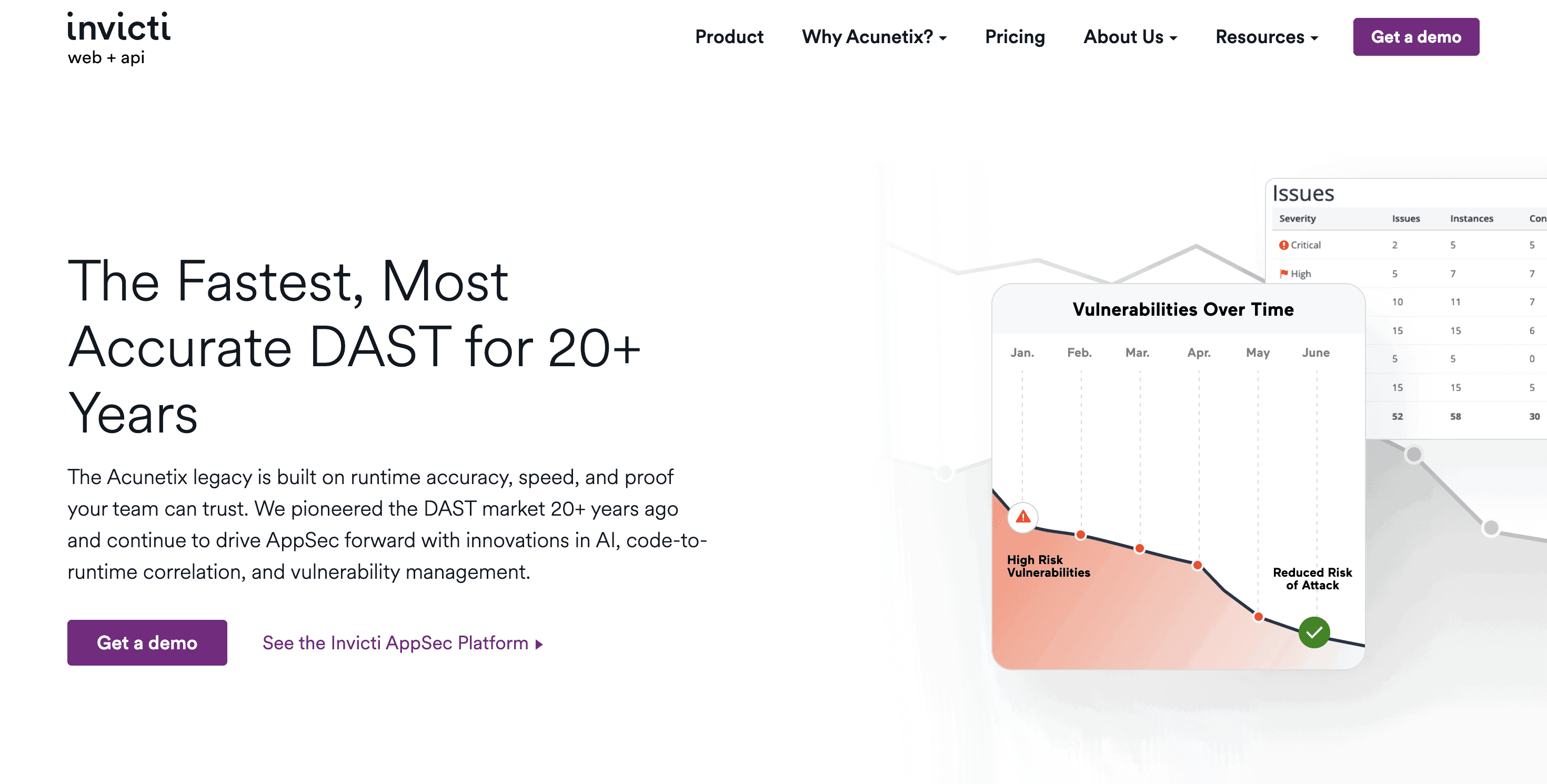
Acunetix is an automated web application security testing platform focused on discovering and testing web applications and APIs. It is a better fit than a manual proxy when the requirement is repeatable vulnerability scanning across applications rather than hands-on request manipulation.
What it does well: automated web application scanning, crawling, API testing, vulnerability detection, and reporting. It is designed to find common web application vulnerabilities at scale and can be used for recurring security assessments rather than relying entirely on a tester manually exploring each application.
Where it differs from Burp Suite: Acunetix is primarily an automated DAST platform, not a Proxy-Repeater-Intruder workbench. A pentester who needs to intercept an individual request, modify parameters, build custom payloads, or manually explore application behavior will still get more control from Burp, Caido, or ZAP.
Choose Acunetix when the priority is automated web application and API security testing across a portfolio, with less emphasis on the granular manual workflow that makes Burp Suite Professional popular.
Is Burp Suite Still Better Than the Alternatives?
Keep Burp Suite Professional when a skilled tester already depends on granular HTTP control, targeted Scanner audits, Collaborator for blind behavior, Intruder payload strategies, project files, and a mature extension ecosystem. Tool-switching has a real productivity cost when the current workbench already fits the job.
Keep or evaluate Burp Suite DAST when PortSwigger’s scanner, centralized portfolio management, CI-driven scans, and governance match the organization’s dynamic-testing requirements. Do not replace a working DAST program solely because another product covers more categories on a marketing matrix.
Can AI Pentesting Platform Like CodeAnt AI Replace Burp Suite?
Not as a universal one-for-one replacement. CodeAnt can consolidate security controls Burp does not natively provide: contextual pull-request review, SAST, SCA, secret scanning, IaC analysis, SBOM visibility, cloud posture, and security gates. It also adds an offensive testing layer intended to connect exploitable behavior with code context.
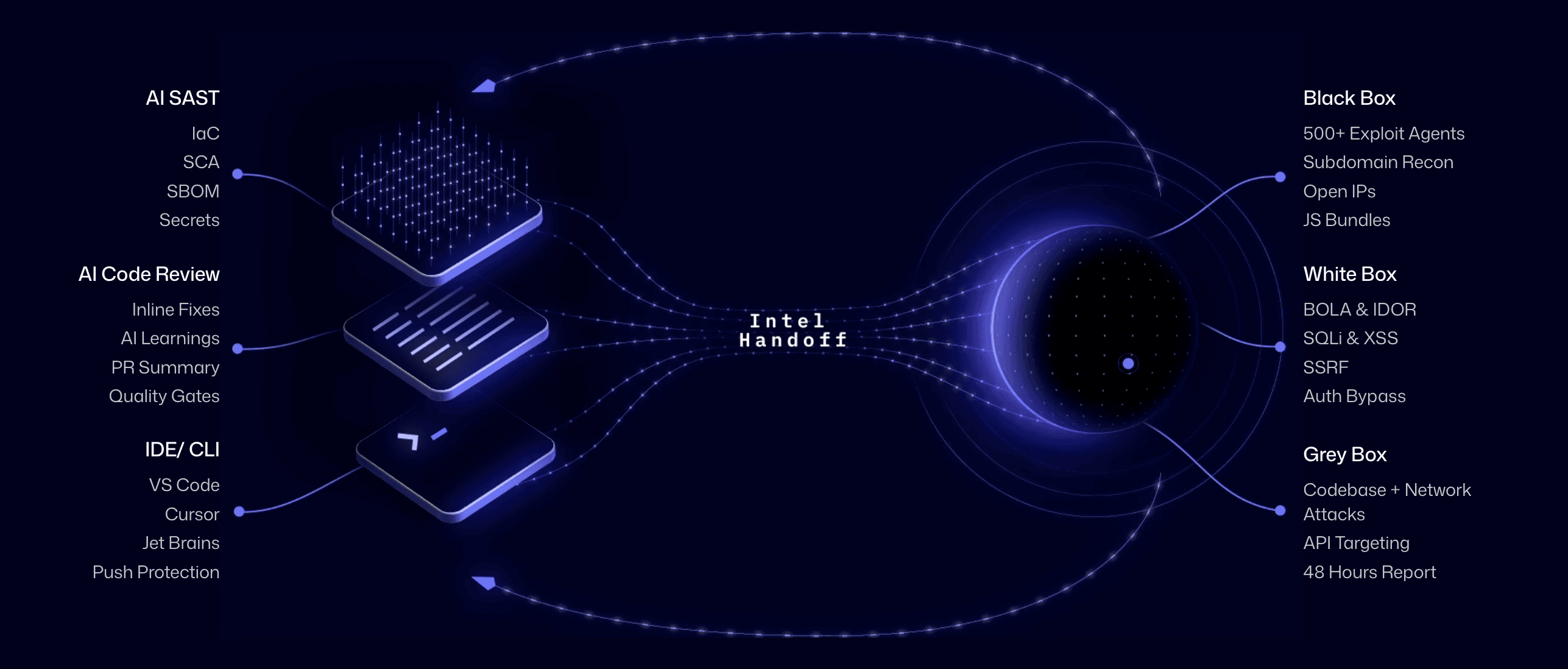
Burp Professional remains purpose-built for a human manipulating runtime traffic. Burp DAST remains a dedicated scanner for reachable applications. Source analysis can catch risks in dormant code and configuration that DAST never reaches; dynamic testing can prove runtime behavior that static analysis cannot see. Strong programs use the layers deliberately.
If ‘replace Burp’ means ‘give a pentester another proxy,’ start with ZAP or Caido. If it means ‘find, prioritize, and fix application risk continuously across code and the running attack surface,’ CodeAnt AI is the more relevant comparison.
The Right Burp Suite Alternative Depends on What You Need to Secure
Burp Suite remains a strong choice when the job is hands-on web application testing. If a security engineer needs granular control over HTTP traffic, request replay, payload manipulation, extensions, and manual investigation, Burp Suite Professional is still purpose-built for that workflow.
But many teams looking for a Burp Suite alternative are solving a larger problem than replacing a proxy. They need security testing to keep pace with development, connect findings to source code, run in CI/CD, and continue validating the application after deployment.
That is where CodeAnt AI fits differently. CodeAnt AI combines AI code review, SAST, SCA, secret scanning, IaC analysis, cloud security, and agentic penetration testing in one continuous security workflow. Its offensive testing adds black-box, white-box, and gray-box coverage, allowing runtime findings to be connected back to the code and configuration that created the risk.
So the decision is simple:
Choose Burp Suite Professional when you need a powerful manual web-testing workbench.
Choose ZAP or Caido when you want a closer hands-on alternative to the Burp workflow.
Choose Nuclei when repeatable, template-driven security checks are the priority.
Choose StackHawk or Invicti when your requirement is automated DAST at the developer or enterprise level.
Choose CodeAnt AI when the requirement is broader: continuously finding, validating, and fixing application security issues across code, dependencies, infrastructure, cloud, and the running attack surface.
The key question is therefore not simply “What replaces Burp Suite?” It is “What security workflow do we need to run continuously?”
If your team has moved beyond point-in-time web testing and wants to connect code security with continuous AI-powered penetration testing, explore CodeAnt AI and see how the platform fits into the development-to-runtime security lifecycle.

