

Bishop Fox does not publish a current price list for penetration testing, Cosmos, secure code review, continuous threat exposure management, red teaming, or most of its other offensive-security services. Buyers receive a custom proposal based on the target, testing depth, schedule, and amount of expert work required.
That makes Bishop Fox pricing harder to compare than a software subscription. The company now offers three named AI-powered application penetration testing packages—Baseline, Standard, and Advanced—but its public package sheet explains the work inside each tier without attaching a dollar amount.
This guide separates what Bishop Fox officially discloses from historical figures and third-party estimates. It also explains the variables that change a quote, how to compare proposals, and when a managed Bishop Fox engagement is likely to be worth the premium.
Bishop Fox pricing: the short answer
Bishop Fox pricing is quote-based. There is no current public rate card for its main services.
Application testing has three public package levels: Baseline, Standard, and Advanced.
The packages differ mainly in human testing depth. Baseline emphasizes AI-powered discovery with one day of human validation; Standard adds human-driven pentesting and attack chaining; Advanced targets critical applications and risk areas more deeply.
Traditional application engagements can span several weeks. Bishop Fox says most require one to two weeks of preparation, one to three weeks of fieldwork, and one to two weeks of reporting and remediation support.
Cosmos and CTEM pricing are also private. Expect scope to depend on asset volume, integrations, monitoring, validation, and service intensity.
Historical or third-party numbers are not a substitute for a quote. An old public vendor-security document referenced a broad $15,000 to $75,000 range for a specific program, but it should not be treated as current Bishop Fox list pricing.
The only reliable way to know the cost is to give Bishop Fox a precise scope and request a written proposal.
Does Bishop Fox publish pricing?
No. The current Bishop Fox services catalog, application penetration testing pages, Cosmos page, and package material do not publish dollar prices, day rates, annual platform fees, or minimum engagement values.
This is normal for a provider whose work can range from an application assessment to a multi-quarter offensive-security program. A small authenticated web application does not consume the same effort as a cloud estate, hardware product, complex API environment, or adversary simulation.
It does create work for the buyer. Without a public starting price, procurement teams cannot determine affordability before discovery. Security leaders must also normalize proposals carefully because one vendor may quote a tightly bounded test while another includes attack chaining, retesting, workshops, portal access, and months of continuous monitoring.
Bishop Fox application penetration testing packages
Bishop Fox’s current AI-powered application penetration testing offer is divided into three levels.
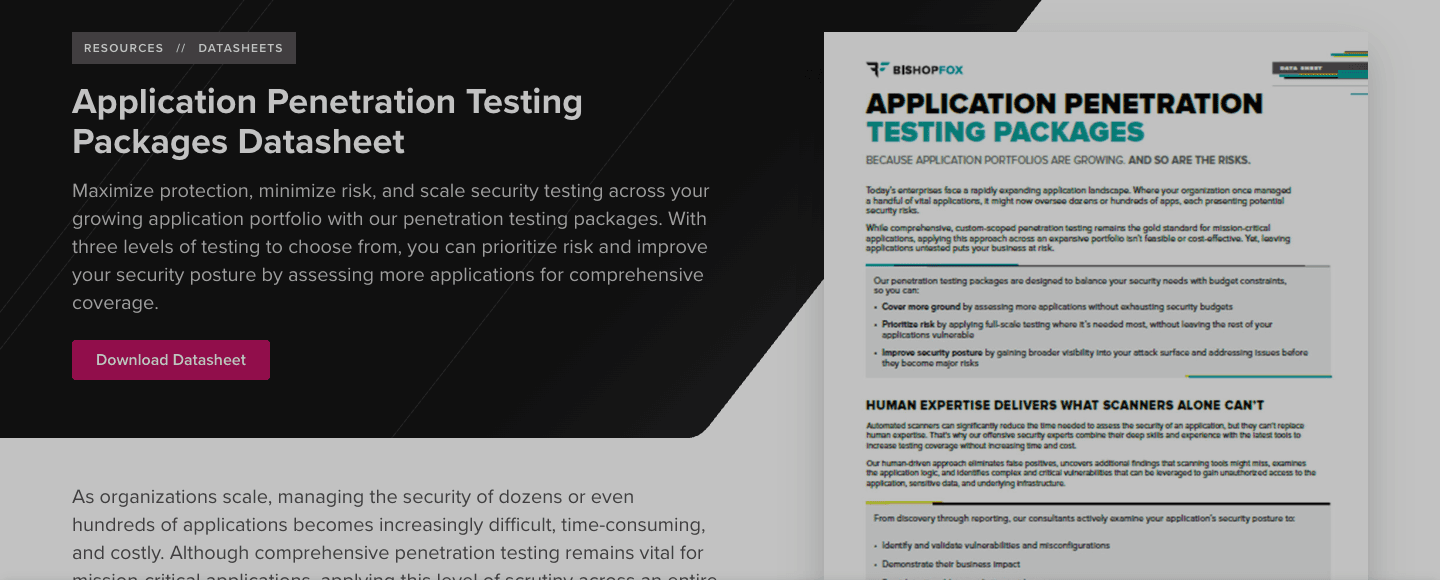
Package | Publicly described testing model | Likely buying goal |
|---|---|---|
Baseline | AI-powered application discovery, vulnerability identification, and testing, followed by one day of human validation and exploitation | Fast portfolio coverage and initial risk triage |
Standard | AI-accelerated discovery and identification plus human-driven penetration testing, exploitation, and attack chaining | Balanced automation and expert depth |
Advanced | Deeper testing of critical applications, features, and risk areas with human-driven work | High-risk or complex applications requiring focused scrutiny |
The important pricing variable is not simply “which scanner is used.” It is how much expert time, judgment, manual exploitation, attack chaining, and application-specific analysis the package reserves.
Baseline package
Baseline is the most productized tier. Cosmos AI performs application discovery, vulnerability identification, and testing. A Bishop Fox tester then spends one day validating and exploiting the results.
This package is designed to produce findings in days and extend coverage across a larger application portfolio. It may be a practical entry point when an organization has many applications, limited test history, or a need to identify which systems deserve a deeper engagement.
Ask whether the one human day includes preparation, validation, documentation, and customer communication or is entirely hands-on testing. Also ask how authenticated roles, APIs, workflows, and application-specific business logic are handled.
Standard package
Standard uses AI to accelerate discovery and vulnerability identification, then adds human-driven penetration testing, exploitation, and attack chaining.
This is likely the most relevant tier for teams seeking a conventional application penetration test enhanced by automation. It should provide more room for a tester to adapt to application behavior, explore authorization boundaries, combine weaknesses, and investigate impact.
The quote will likely be sensitive to application size, roles, API breadth, architecture, and the number of manual test days.
Advanced package
Advanced is aimed at critical applications, specific features, or selected risk areas that need deeper testing. Bishop Fox describes it as human-driven work with greater focus.
Examples may include a complex multi-tenant authorization model, a sensitive financial workflow, a novel authentication design, a major architectural migration, or a high-impact administrative plane. The scope can be narrower than a portfolio test while still costing more per target because it concentrates senior expertise.
Get the targeted hypotheses, techniques, and expected deliverables written into the statement of work. “Advanced” should mean a defined increase in depth, not simply more elapsed time.
How long does a Bishop Fox penetration test take?
Bishop Fox’s application penetration testing FAQ gives a useful traditional timeline:
One to two weeks for scoping and preparation
One to three weeks for fieldwork
One to two weeks for reporting and remediation support
That creates a typical end-to-end window of roughly three to seven weeks, although actual timing depends on complexity and availability. AI-powered Baseline packages may deliver findings in days.
Time matters because professional-services pricing is partly a function of reserved people and calendar. A rush start, fixed launch deadline, weekend work, or coordinated test window can affect the proposal. Long procurement lead times can also create an indirect cost when a product release or compliance review depends on the report.
The 10 factors that influence a Bishop Fox quote
1. Number of targets
One web application is different from five applications, three APIs, mobile clients, cloud accounts, and an external network range. Ask Bishop Fox to itemize each target and show how incremental applications change the price.
2. Application size and route count
The number of endpoints, pages, workflows, APIs, and integrations affects both automated coverage and manual validation. A route inventory is more useful than a vague label such as “medium application.”
3. User roles and authorization complexity
Applications with customer, support, analyst, administrator, partner, and tenant-specific roles require more test permutations. Authorization testing often produces the most consequential SaaS findings, but it consumes setup and reasoning time.
4. Testing perspective
Black-box testing supplies little internal context. Gray-box testing may include credentials, documentation, and API collections. White-box testing can include source code and architecture. More context can improve efficiency, but secure code review is a distinct service and may be priced separately.
See the guide to black-box, white-box, and gray-box penetration testing before writing the scope.
5. Package depth
Baseline, Standard, and Advanced allocate different levels of human work. A cheap Baseline package is not equivalent to a multi-week Advanced review. Compare the actual techniques, roles, and hours rather than the package label alone.
6. Environment and architecture
Single-page applications, thick clients, GraphQL, microservices, event-driven systems, cloud control planes, Kubernetes, and proprietary protocols change the testing approach. Production restrictions or fragile environments can add planning and coordination.
7. Compliance requirements
SOC 2, ISO 27001, PCI DSS, customer assurance, or regulator expectations can change evidence and reporting needs. Confirm that the deliverable maps cleanly to the control or procurement requirement.
8. Reporting and workshops
An executive briefing, technical readout, developer workshop, architecture consultation, or board-ready summary may be included or separately priced. Obtain a redacted sample report before buying.
9. Retesting
The number of verification rounds and time window can materially change effective cost. Bishop Fox discusses remediation testing, but its public pages do not promise one universal retest allowance for every package.
Specify:
Number of included retest rounds
Deadline for requesting them
Whether partial fixes can be tested
Expected turnaround
Whether the updated report costs extra
How disputed findings are handled
10. Scheduling and procurement
A rapid start, named specialist, tight delivery date, travel, on-site work, or unusual legal requirement may affect price. Ask how long the quote remains valid and when the proposed team can actually begin.
What does Bishop Fox secure code review cost?
Bishop Fox does not publish secure code review prices. It offers three levels:
Baseline: SAST plus expert validation
Targeted: SAST, expert validation, and manual code review
In-depth: SAST, expert validation, manual review, and threat modeling
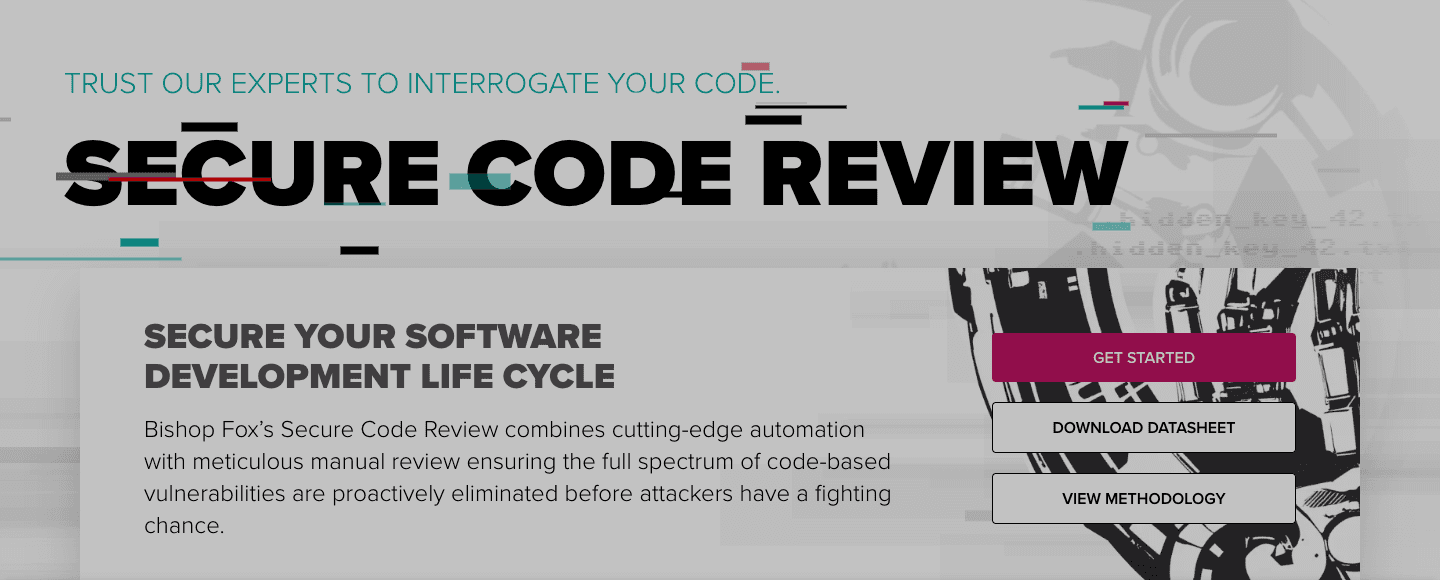
The quote will likely depend on language, repository size, architecture, generated code, dependencies, security-critical modules, build requirements, threat-model scope, and the manual-review depth.
Lines of code alone are a poor estimator. A small cryptographic or authorization component may require more senior attention than a much larger straightforward service. Ask Bishop Fox to identify included repositories, excluded code, review objectives, supported languages, and the exact manual techniques.
For continuous pull-request analysis rather than a scoped review, compare the service with CodeAnt AI code security and AI code review.
What does Bishop Fox Cosmos cost?
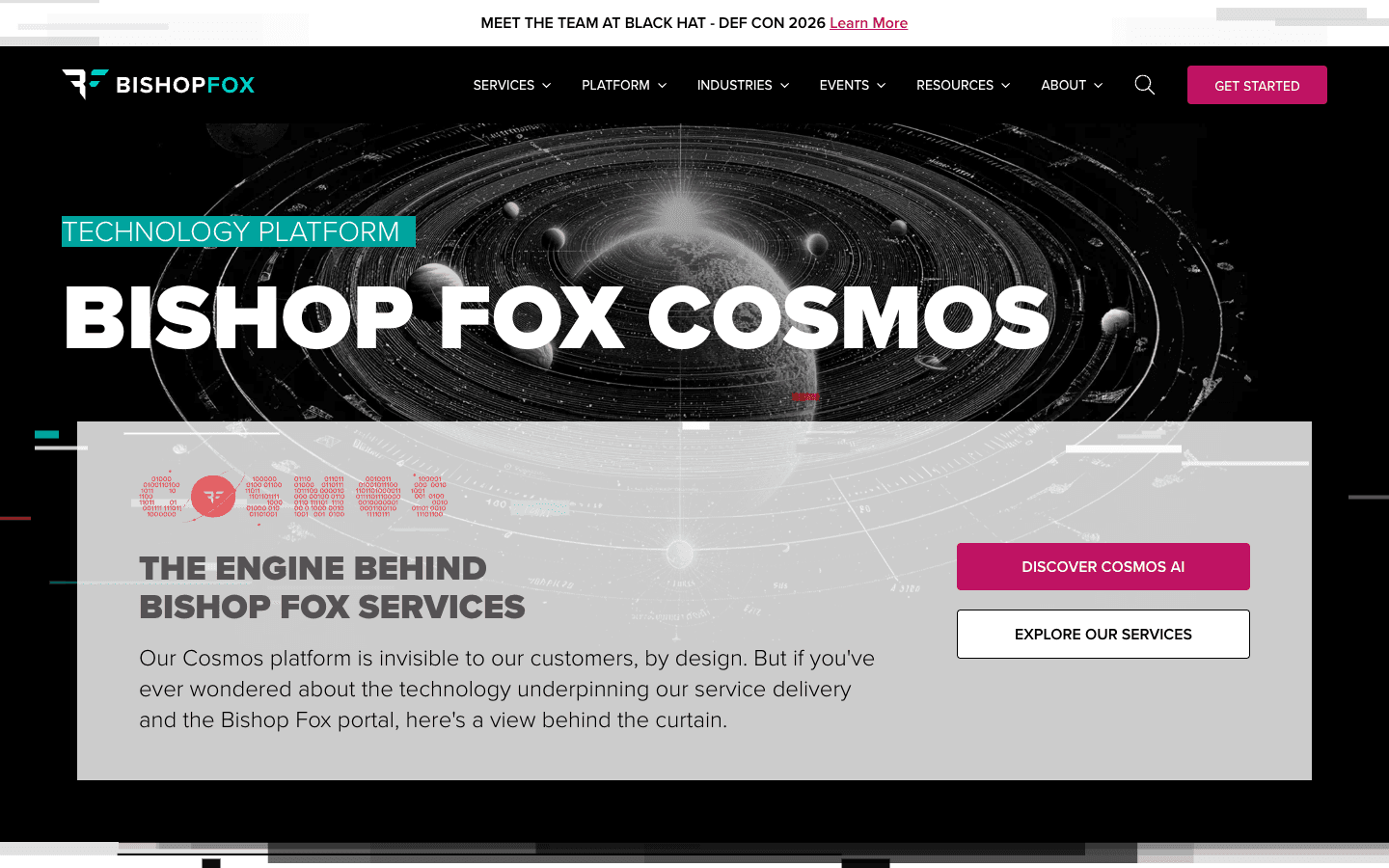
The Cosmos platform is operated and managed by Bishop Fox. It provides continuous external asset discovery, validation, evidence, findings, portal workflows, and expert analysis. It connects with AWS, Google Cloud, Azure, Cloudflare, and Oracle, and supports Jira and ServiceNow workflows.
Bishop Fox does not publish a Cosmos subscription or per-asset fee. A proposal may be influenced by:
Number and volatility of external assets
Cloud accounts and connectors
Domains, subsidiaries, and acquired companies
Continuous monitoring and validation requirements
Expert testing or CTEM service level
Jira, ServiceNow, and reporting needs
Remediation coordination
Contract duration
Ask whether pricing is based on assets, domains, business units, testing capacity, expert hours, or an annual program. Define what happens when the discovered asset count grows. A continuous platform that charges unpredictable overages can become hard to budget.
What do Bishop Fox cloud, network, AI, and red-team services cost?
These services are also quote-only.
Cloud penetration testing can vary by provider, account count, objective, Kubernetes scope, IAM complexity, and whether testing includes control-plane or application-layer paths. Internal and external network testing depends on address ranges, segmentation, identity objectives, locations, and assumed access.
AI and LLM security assessments may include model APIs, retrieval-augmented generation, agent permissions, sensitive-data handling, prompt injection, tool abuse, and application authorization. Red teams can involve longer planning, custom infrastructure, social engineering, physical objectives, and detection-engineering collaboration.
Do not compare these engagements using a single day rate. Compare objectives, rules of engagement, team composition, allowed techniques, reporting, cleanup, and success criteria.
Can historical Bishop Fox pricing help?
Only as weak context. A historical Google vendor-security document associated with Bishop Fox referenced a broad $15,000 to $75,000 range for a particular program. It was not a universal public price list, and it predates the company’s current Cosmos AI application packages.
Third-party directories and cost sites sometimes publish estimated Bishop Fox project bands. Those figures are not verified Bishop Fox quotes. They may reflect different years, targets, geographies, or buyers.
Use historical and third-party numbers to prepare a budget conversation, not to claim that a current engagement will cost a specific amount.
Bishop Fox pricing versus CodeAnt AI
The commercial models are different.
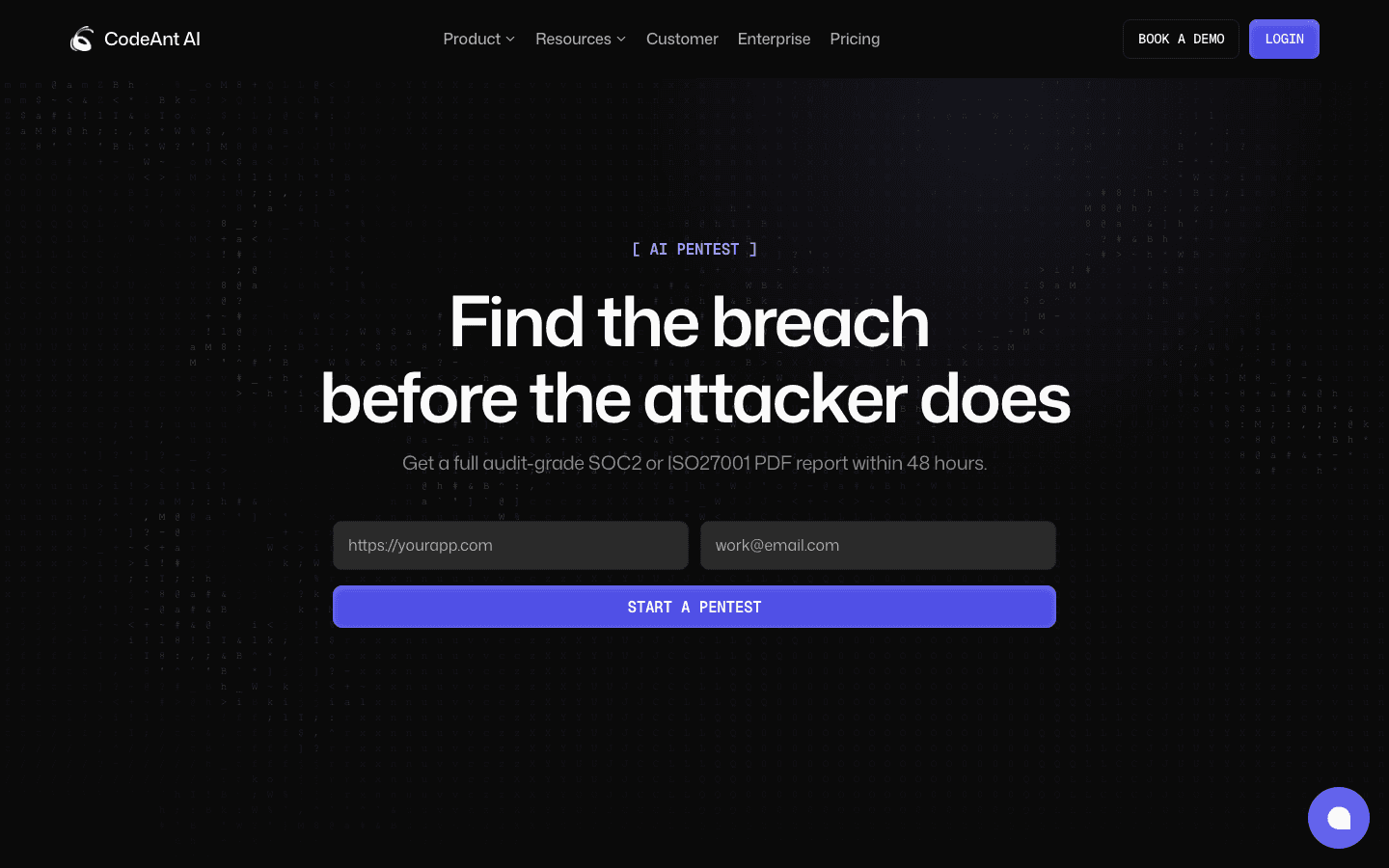
CodeAnt’s AI penetration testing page advertises:
No engagement fee
Payment when a working proof-of-concept exploit is delivered
No payment when nothing exploitable is found
An audit-grade report within 48 hours
Free unlimited rescans
Bishop Fox prices a managed service: expert planning, AI-augmented discovery, manual testing at higher tiers, reporting, and remediation support. Its broader services can also cover cloud, networks, hardware, mobile, AI systems, CTEM, and red-team objectives.
Commercial question | CodeAnt AI | Bishop Fox |
|---|---|---|
Public pentest terms | Yes, outcome-based terms are published | No current public prices |
Initial time to result | 48-hour report advertised | Baseline findings in days; traditional projects take longer |
Retesting | Unlimited rescans advertised | Confirm in each proposal |
Human-led manual depth | Product and expert-assisted workflow | Explicit Standard and Advanced packages |
Broader offensive-security scope | Application and software-delivery focus | Extensive managed-service catalog |
Procurement style | Productized entry point | Discovery and custom statement of work |
The lower-cost choice depends on the job. CodeAnt can reduce transaction and retest costs for frequent application releases. Bishop Fox may be more economical than assembling several specialist vendors when the organization needs a broad managed offensive-security program.
Read the complete CodeAnt AI vs Bishop Fox comparison for the capability differences.
How to compare Bishop Fox proposals fairly
Build a normalized worksheet with these rows:
Proposal item | What to capture |
|---|---|
Targets | Applications, APIs, roles, repositories, accounts, ranges, devices |
Testing model | AI-powered, automated, expert-validated, or human-driven |
Manual effort | Tester days, named roles, seniority, and attack chaining |
Schedule | Earliest start, fieldwork, first critical alert, final report |
Deliverables | Executive, technical, compliance, portal, and raw evidence |
Retesting | Rounds, window, turnaround, and report update |
Workshops | Kickoff, readout, remediation, developer, and executive sessions |
Exclusions | Business logic, denial of service, source, third parties, production |
Integrations | Jira, ServiceNow, cloud connectors, repository and CI workflows |
Total price | Base fee, optional items, expenses, overages, renewal |
Send the same scope to every shortlisted provider. A proposal that appears 30% cheaper may exclude an API, role, retest, or technical workshop.
Questions to ask Bishop Fox before signing
Which package fits this application, and why?
How much human testing is included?
Who will perform the work, and can we meet the technical lead?
What does Cosmos AI test autonomously?
How are authenticated roles and business-logic workflows covered?
When will critical findings be reported?
How many retest rounds are included?
Is secure code review separate from the penetration test?
What are the exclusions and testing constraints?
Can we review a redacted report and portal workflow?
What causes a change order?
Are travel, workshops, or expenses included?
How does pricing change if the asset count grows?
What happens if fieldwork is blocked by environment instability?
Can the engagement begin before our compliance deadline?
Is Bishop Fox worth the cost?
Bishop Fox is most likely to justify its price when the organization needs specialized human judgment, independent assurance, broad target coverage, or a managed program that extends beyond web applications.
It may be worth the premium for:
Complex authorization and business workflows
Critical cloud and identity paths
Hardware or embedded systems
AI and LLM applications
Red teams and detection validation
Continuous external exposure management
Executive and regulator-facing assurance
Organizations without enough internal offensive-security capacity
It may be more service than necessary when a team primarily needs rapid, repeatable web and API testing tied directly to code changes. In that case, evaluate CodeAnt AI or another productized pentesting platform first.
The best answer comes from a pilot. Provide a representative application, define success metrics, compare confirmed exploit quality and remediation effort, and calculate the full internal cost—not only the invoice.
Final verdict
Bishop Fox pricing is private and scope-dependent. Its public application packages help buyers understand testing depth, but they do not reveal current dollar amounts.
Baseline is designed for fast AI-powered coverage with a day of human validation. Standard adds human-led penetration testing and attack chaining. Advanced goes deeper on critical applications and selected risk. Cosmos, CTEM, secure code review, cloud testing, network testing, AI assessments, and red-team work all require custom proposals.
Treat old ranges and third-party estimates as unverified context. Obtain an itemized statement of work, normalize human effort and retesting, and measure the proposal against a defined security outcome. Bishop Fox is best suited to buyers who value managed expertise and broad offensive-security coverage; product-led teams seeking continuous application testing should also compare Bishop Fox alternatives.

