

Choosing a penetration testing provider for NYDFS is narrower than choosing one ingeneral. The regulation is specific about what testing has to happen, so the right provider is the one whose delivery lines up with 23 NYCRR 500, not just the one with the best marketing.
This guide evaluates providers through the NYDFS lens specifically, on both testing obligations, inside-and-outside evidence, and certification readiness. For the wider field sorted by approach, see our best penetration testing tools for insurance guide.
What CodeAnt AI solves here: CodeAnt AI runs continuous, code-aware penetration testing that satisfies the NYDFS annual limb, covers the after-material-change limb as code ships, and produces evidence mapped to 500.5 for the April certification. Pricing is outcome-based.
I reviewed the current text of 23 NYCRR 500 and the public service pages of the providers named here on July 27, 2026. This is a compliance-fit comparison, not legal advice.
What NYDFS 23 NYCRR 500.5 Requires From A Penetration Testing Provider
Before comparing providers, fix the checklist, because NYDFS gives you one. A provider that cannot tick every box below leaves a gap you carry into the certification.
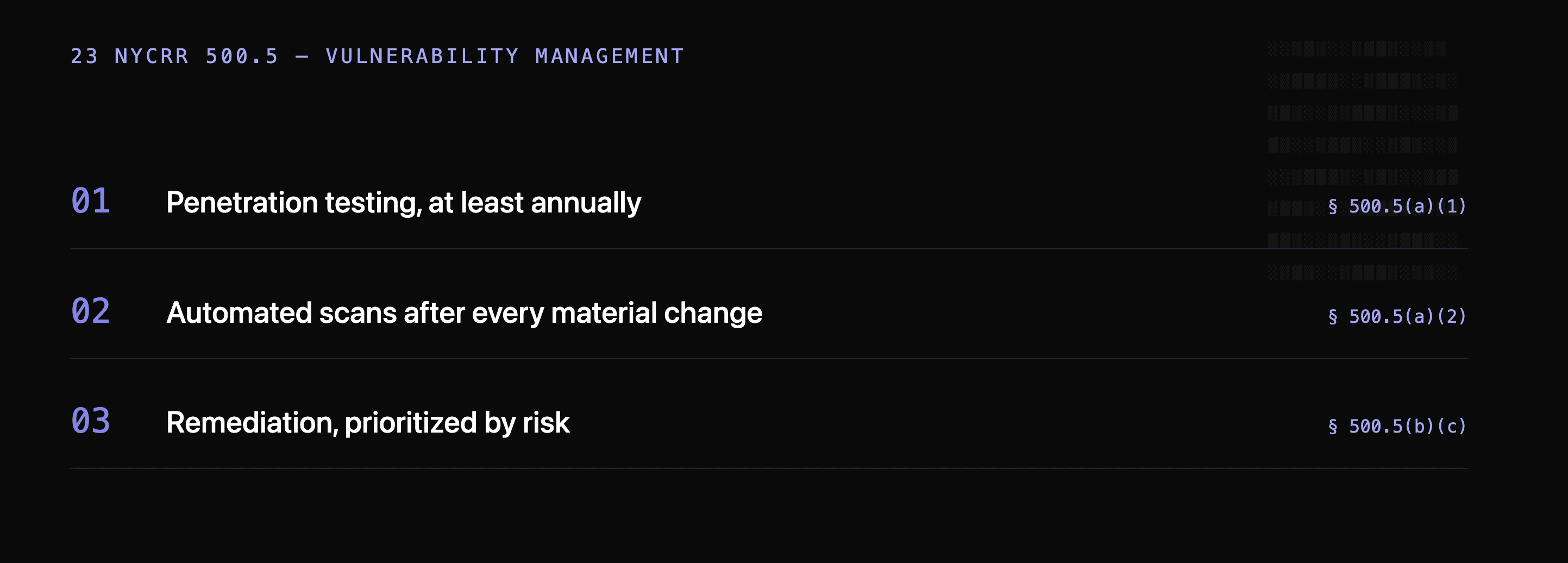
Inside and outside the boundary. Section 500.5(a)(1) requires penetration testing from both perspectives at least annually, so a provider testing only the perimeter meets half the requirement.
After every material change. Section 500.5(a)(2) requires testing promptly after any material system change, which a provider scoped for a single annual engagement does not cover on its own.
Risk-prioritized remediation. The rule expects findings remediated by risk, so the provider's output has to rank exposure, not just list it.
Certification-ready evidence. The April certification is signed by your highest-ranking executive and CISO, so the testing record has to support that attestation. The full requirement is in our NYDFS penetration testing requirements guide.
Best Penetration Testing Providers For NYDFS Compliance
These providers are evaluated on NYDFS fit rather than general capability. Full capability profiles for each sit in the tools guide.
CodeAnt AI, both limbs in one platform
CodeAnt is built for the part of 500.5 that trips insurers up, the second limb. It runs black, white, and gray box testing inside and outside the boundary for the annual requirement, and because it runs continuously on every change, it covers the after-material-change obligation without booking a new engagement.
Its evidence fits the certification directly. Each finding ships with a working proof of exploit, the code path behind it, a risk rating, and a retest, mapped to the control it satisfies.
Outcome-based pricing means a zero engagement fee with payment only on confirmed critical findings, which keeps the after-change cadence affordable.
Cybri, names NYDFS explicitly
Cybri is worth listing for NYDFS specifically because it names 23 NYCRR 500 as a target framework alongside SOC 2, HIPAA, and FINRA, with a CREST-accredited red team. That regulatory specificity means the reporting is built with the examiner in mind.
It fits insurers wanting rapid, compliance-mapped manual testing that clears NYDFS and enterprise questionnaires. As a point-in-time engagement, the after-change limb still needs a plan for testing between engagements.
ScienceSoft, consulting depth with NYDFS coverage
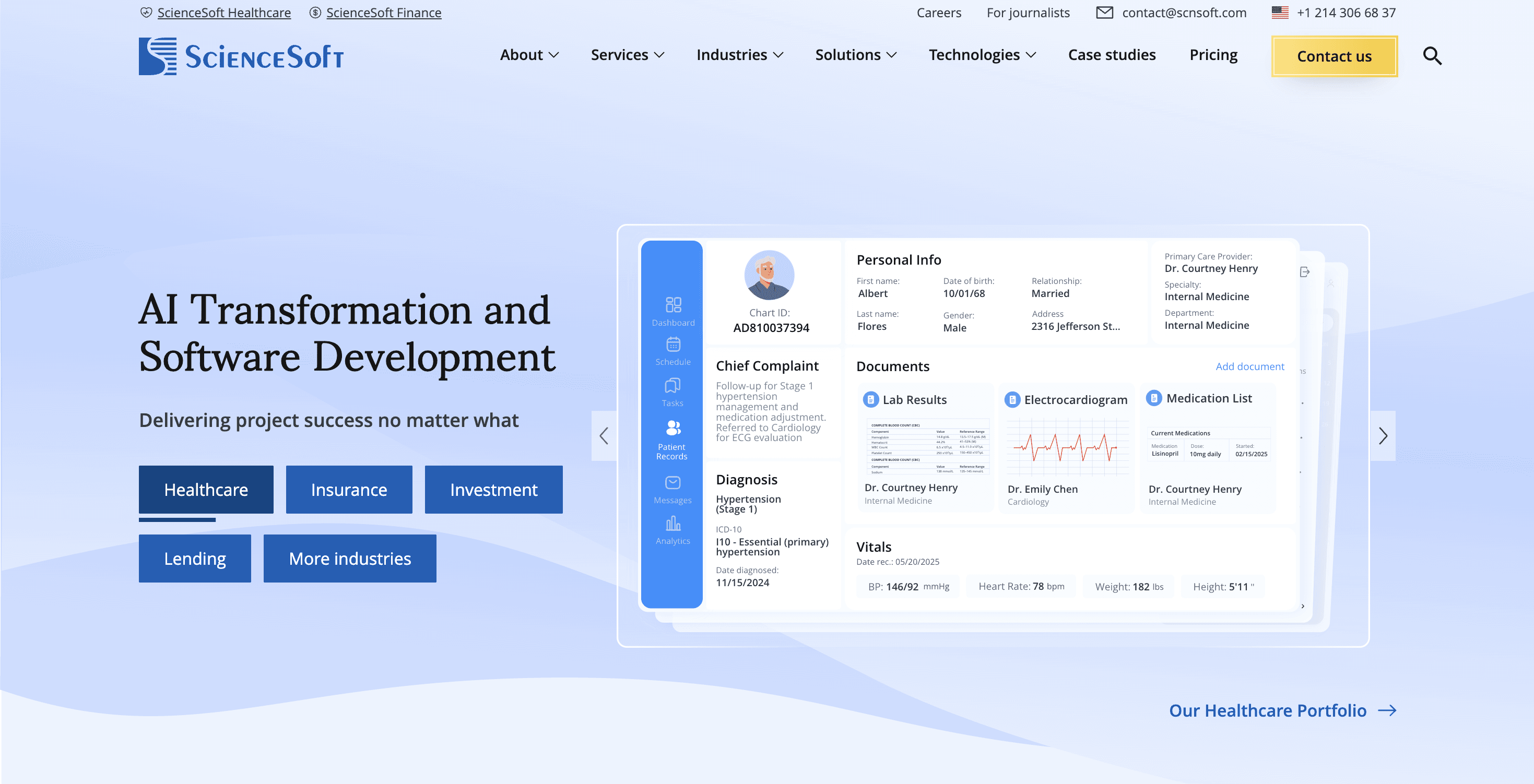
ScienceSoft has run security testing since 2003 and explicitly lists NYDFS among the regulations its compliance-focused testing addresses, delivered by certified ethical hackers across black, white, and gray box modes. It suits insurers wanting a senior human engagement with named attestation.
The model is project-based, so as with any consulting firm, covering the after-material-change limb means additional engagements, which its long-term cooperation pricing can offset.
Synack, NetSPI, BreachLock, and Cobalt
Several platforms satisfy the annual limb well and vary on the rest.
Synack pairs agentic AI with a vetted red team and adds FedRAMP authorization for government-adjacent lines, and NetSPI brings enterprise consultancy depth with audit-mapped reporting.
BreachLock offers compliance-mapped recurring testing at a lower price point.
Cobalt provides fast crowdsourced coverage, though its findings can need post-processing to line up with examiner expectations.
For each, the NYDFS question is the same, confirm inside-and-outside coverage, an after-change plan, and evidence mapped to 500.5 before signing.
How To Evaluate A Penetration Testing Provider For NYDFS Compliance
General shortlisting misses the regulation-specific gaps. Judge every provider against these NYDFS-specific questions.
Do they test inside and outside the boundary? Ask to see both in scope, not just an external test.
How do they cover the after-material-change limb? A provider without an answer leaves you exposed between annual tests.
Do findings map to 500.5? The report should reference the requirement, not just CVSS scores.
Is the evidence certification-ready? It has to support an attestation signed by your highest executive and CISO.
Do they retest to closure? Remediation evidence needs a confirming retest.
The provider evaluation framework gives you a full scorecard, and the continuous-versus-annual tradeoff behind the after-change limb is covered in our dedicated comparison.
What NYDFS Certification Evidence Your Penetration Testing Provider Must Deliver
The certification is where testing meets accountability, so the provider's output has to hold up there. Section 500.17 requires an annual certification of material compliance, signed by the highest-ranking executive and the CISO.
That signature depends on the testing record. To support it, the provider should deliver proof that exploitable findings were tested inside and outside the boundary, that remediation was prioritized by risk and carried out, and that retesting confirmed closure across the period, not just on a single test day.
A continuous provider produces that record as it goes, while a point-in-time provider produces a dated snapshot that has to be supplemented for the intervening months. Insurers running SOC 2 in parallel should read the insurtech NYDFS and SOC 2 guide, since the evidence windows interact.
Conclusion: Choose A NYDFS Provider That Covers Both Testing Limbs
The best penetration testing provider for NYDFS is the one whose delivery matches the regulation, both limbs of Section 500.5, inside-and-outside evidence, risk-prioritized remediation, and a record that supports the April certification. General capability is necessary but not sufficient, because a strong provider that only tests the perimeter once a year still leaves a compliance gap.
The differentiator among providers is the second limb. Point-in-time firms cover the annual test well and turn after-change testing into repeat engagements, while continuous, code-aware platforms cover both and keep the certification evidence current. Shortlist NYDFS penetration testing providers by how well they cover both testing limbs, not by general pentest claims. Run a scoped pilot, review the evidence as a DFS examiner would, and choose the provider that gives you annual testing, after-change validation, retesting, and a certification-ready record in one workflow.
For the requirement in full, start with our NYDFS penetration testing requirements guide.

