

Insurers licensed in New York face a build-or-buy question every year: bring in a consulting firm for a deep manual engagement, or run an automated, code-aware platform continuously. Both can satisfy the annual test, and they behave very differently across the rest of the regulation.
This guide compares the two models for a NYDFS-regulated insurer, lays out the full automated workflow in technical detail, and maps each approach to what 23 NYCRR 500 actually requires.
What CodeAnt AI solves here: CodeAnt AI runs continuous, code-aware penetration testing across code, cloud, APIs, and external surface, with a human revalidation stage on every finding. It satisfies the NYDFS annual requirement, covers after-change testing as code ships, and prices on outcomes.
Short answer: choose a consulting engagement when you need a senior human team for a deep, point-in-time audit of a complex or slow-changing estate. Choose automated, code-aware testing when you ship frequently and need continuous coverage, after-change testing, and evidence that stays current, all of which the annual model cannot provide alone.
I reviewed the current text of 23 NYCRR 500 and the public service pages of the vendors named here on July 27, 2026. This is a capability comparison, not legal advice, and not a claim of any assessment run against these firms.
Automated Vs Consulting Penetration Testing At A Glance
The two models sit at different points on depth, cadence, and cost. Neither is strictly better, and the fit depends on how your systems change.
Dimension | Consulting engagement | Automated code-aware testing |
|---|---|---|
Who tests | Senior human researchers | Agents, with human revalidation |
Cadence | Point-in-time, scheduled | Continuous, on every change |
Source-code depth | Optional add-on service | Native, reads the repository |
NYDFS 500.5(a)(1) annual | Satisfied | Satisfied |
NYDFS 500.5(a)(2) after change | Extra engagement each time | Covered as changes ship |
Turnaround | Weeks per engagement | 48-hour report, free re-scans |
Billing | Project fee, often five figures | Subscription or outcome-based |
Best fit | Complex, slow-changing estates | Frequent releases, insurtech |
What Consulting Penetration Testing Looks Like For NYDFS Insurers
The consulting model is the traditional approach to penetration testing. A specialist team scopes the engagement, confirms the systems in scope, assigns experienced testers, runs the assessment over a fixed window, and delivers a final report with findings, severity ratings, remediation guidance, and evidence.
For NYDFS-regulated insurers, this model can work well for the annual penetration testing requirement under Section 500.5(a)(1). A consulting engagement gives the organization a clean point-in-time artifact for the file, which can be useful for board reporting, examiner review, and annual certification support.
The main strength of consulting penetration testing is human depth. Experienced testers can apply judgment to complex business logic, unusual workflows, chained attack paths, and areas where automated systems may need additional context. This is especially useful for large legacy environments, complex insurance workflows, or one-off assessments where the organization wants a senior human-led review.
The limitation is cadence. A consulting engagement is usually scoped around a fixed testing window, often once a year or around a major audit cycle. That means it may not automatically cover every new API, broker portal update, claims-system change, cloud configuration change, or third-party integration added after the report is delivered.
For NYDFS insurers, this matters because Section 500.5 is not only about the annual test. The regulation also expects testing and review after material system changes. If the organization relies only on a scheduled consulting engagement, each material change may require additional scoping, scheduling, testing, reporting, and retesting. That can make the model slower and more expensive for insurers that ship frequently.
In short, consulting penetration testing is strongest when the environment is complex but changes slowly, when a board or auditor wants a senior human-led assessment, or when the insurer needs a deep point-in-time review. It becomes harder to rely on as the only model when applications, APIs, portals, and cloud systems change continuously.
What Automated Code-Aware Penetration Testing Looks Like
The automated model inverts the cadence. Instead of a scheduled engagement, agents test continuously, and because they can read the codebase, they reach the authorization logic that generic scanning misses.
The important distinction is depth. NYDFS defines penetration testing as attempting to circumvent or defeat security features, which is a higher bar than enumerating them.
An automated platform meets that bar only if it chains findings into a proven exploit, which is where the workflow below matters.
How CodeAnt Runs Automated Code-Aware Penetration Testing
Phase 1
Passive Recon
Maps your full attack surface, subdomains, open ports, exposed configs, and known CVEs, without touching your systems.


Passive Recon
App Intelligence
500+ Agents
Attack Chains
Evidence
CodeAnt runs three testing modes as one system, black box from the outside, white box through the code, and gray box combining both. Here is what each actually does, because the workflow is the difference between an automated scan and an automated pentest.
Black box, the outside-in attack
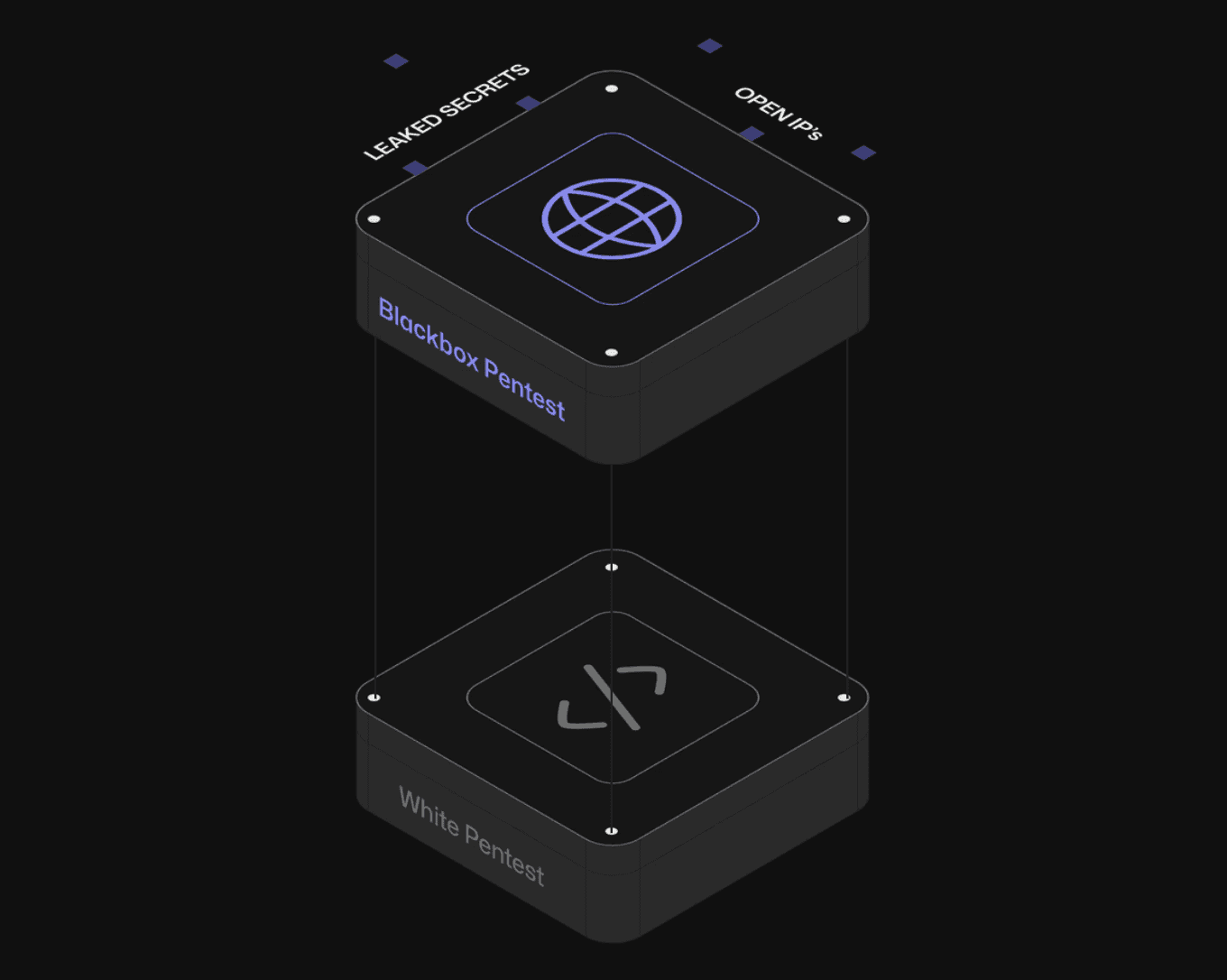
Black box testing sees the insurer the way an external attacker does, with no access, and it runs in six stages.
Reconnaissance maps everything exposed, open ports, CVEs on the network, IP inventory, and vendor risk, then adds the two inputs most tests skip: which threat actors are actively probing the organization, and which credentials are already leaked on the open internet. Service discovery identifies what is actually running behind each exposed port and which services answer without authentication. Reachability filters the findings down to what an attacker can genuinely touch, and which paths lead toward policyholder data.
Chaining is where the data leak gets proven, linking individually minor issues, threats, and root causes into a single path that ends at exfiltrated data, which is the stage that separates a pentest from a scan. Human revalidation then puts researchers in the loop to confirm every finding against the live system and extend the chain further than automation reached. Evidence collection packages a working proof of exploit, the path behind it, severity, remediation, and a retest, formatted for SOC 2, ISO 27001, and HIPAA.
White box, reading the code and the cloud together
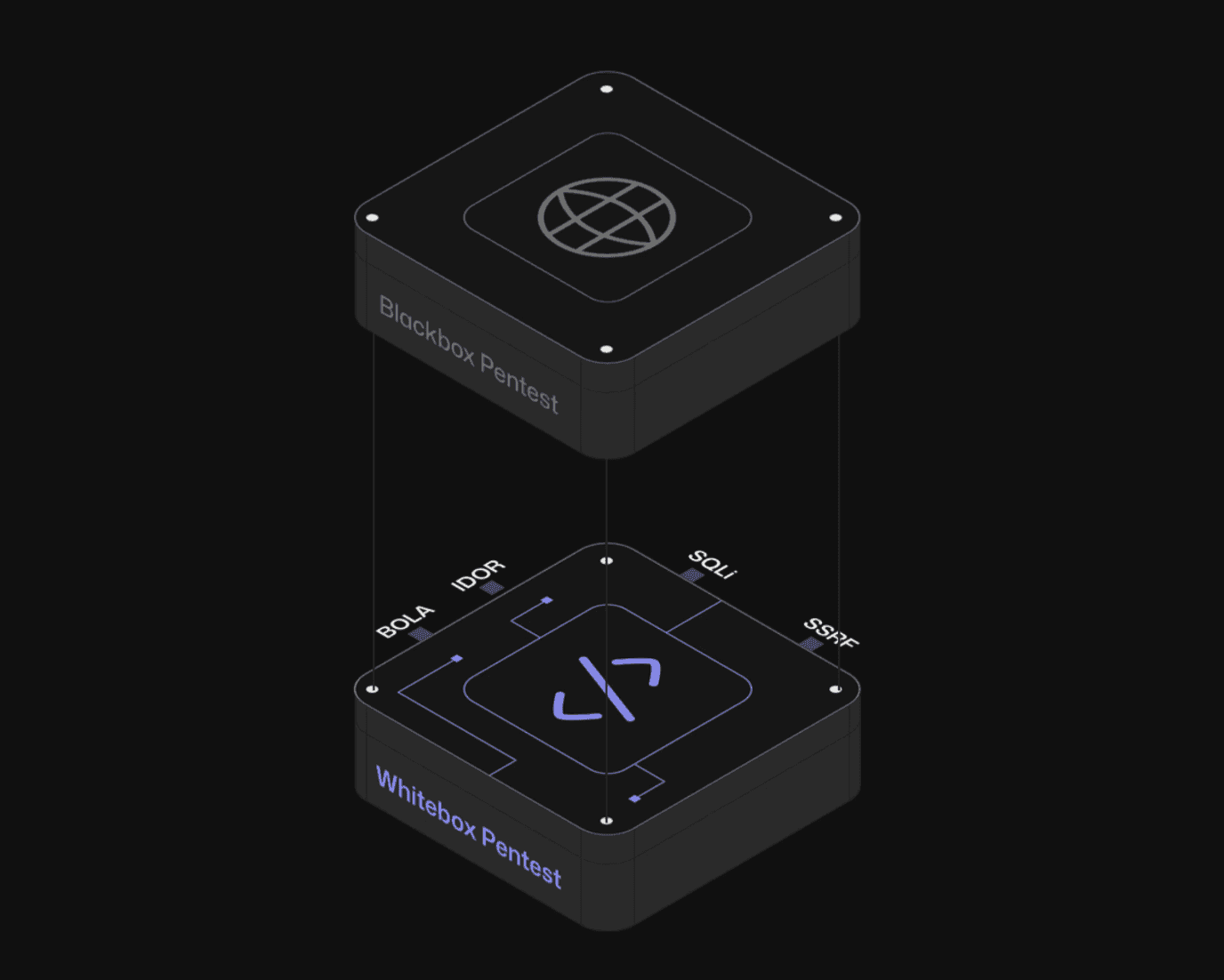
Black box is bounded by design, because no external attacker can read your source while the perimeter holds. White box removes that limit by reading the codebase directly.
It inspects every API call and every database call, and builds a threat model from what it finds, covering current application issues, third-party dependency risk, infrastructure weaknesses, exposed secrets, and SBOM problems. Then it pairs that model with the cloud, mapping misconfigured WAF rules, weak network layers, and storage exposure alongside the application picture rather than in isolation.
The payoff is the seam between code and cloud. Modeling how internal applications talk to the cloud surfaces the things nobody documents, like an unauthenticated internal API call reaching the policyholder database with no rate limiting, invisible from outside and severe to anyone already inside.
This is why the best programs integrate testing across the whole SDLC, from the developer's first commit through pull requests and CI/CD, so the threat model updates on every commit instead of once a year.
Gray box, attacking from outside with inside knowledge
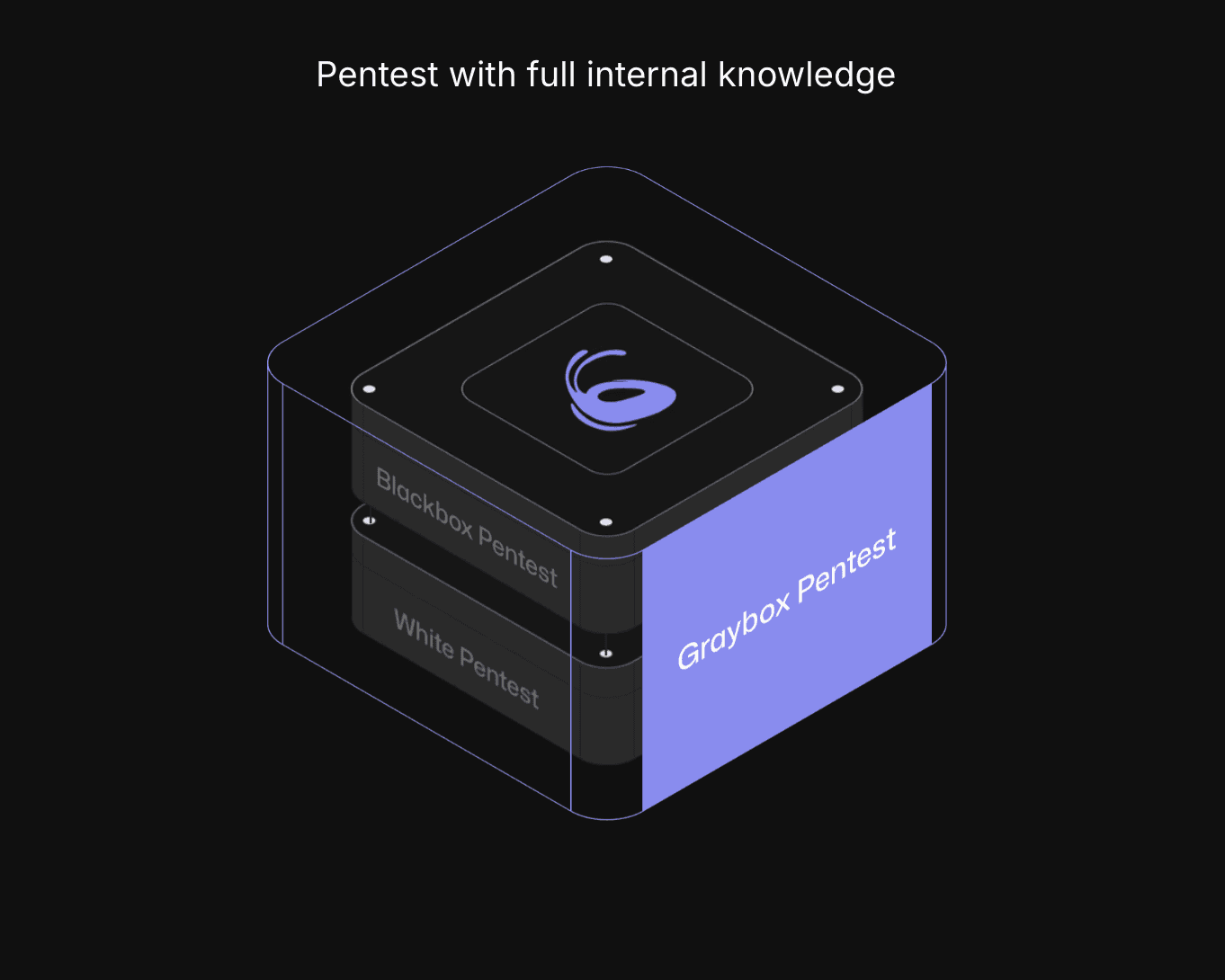
Gray box combines the two views, and it finds what neither produces alone. It takes the internal threat model from the white box work, steps back outside the perimeter, and attacks as an adversary who happens to know the layout.
The archetypal case for an insurer is an API chain. A public endpoint looks harmless on its own, but internal knowledge reveals a private downstream API behind it that performs a database call, so the attack targets the public route with the internal path in mind, aiming to corrupt or exfiltrate from a database the outside world was never supposed to reach.
The house analogy makes it concrete. An open front door is black box, learning the layout of rooms you are not permitted to enter is white box, and gray box is someone opening a window from inside so an adversary outside can study the layout and use it on the way in.
The full breakdown is in our black, white, and gray box guide.
Automated Vs Consulting Penetration Testing Cost And Pricing Models
There is a structural point underneath the two approaches. A consulting engagement bills for researcher time and is paid whether or not it finds a critical issue, which optimizes for a clean report delivered on schedule.
Outcome-based automation inverts that incentive. Payment depends on confirming a real, critical, exploitable issue, so a shallow test earns nothing and the work is pushed all the way to a proven data leak.
Our guide to paying only when a test finds something real explains the model, and the cost guide compares it to project pricing.
How Automated And Consulting Penetration Testing Map To NYDFS 500.5
Compliance is where the comparison gets concrete for an insurer, because 500.5 has two limbs and the models cover them differently.
Requirement | Consulting engagement | Automated code-aware |
|---|---|---|
500.5(a)(1) annual pentest | Strong, deep human audit | Satisfied, continuous plus annual artifact |
500.5(a)(2) after material change | Separate engagement each time | Covered automatically as code ships |
Inside-and-outside testing | Yes, if scoped | Yes, black and white box native |
Evidence for April certification | One dated report | Continuous findings and retest log |
Named human attestation | Yes | Human revalidation, platform-attributed |
The pattern is that a consulting engagement is strong on the annual limb and expensive on the after-change limb, while automated testing covers both at once. Insurers running SOC 2 in parallel should also read the insurtech NYDFS and SOC 2 guide, and the deeper continuous-versus-annual tradeoff is in our dedicated comparison.
Should NYDFS Insurers Choose Automated, Consulting, Or Hybrid Pentesting?
The decision follows from your estate and your cadence. This maps the common cases.
Your situation | Model | Reason |
|---|---|---|
Large, complex, slow-changing infrastructure | Consulting | Senior human depth for a deep annual audit |
Insurtech shipping weekly | Automated code-aware | The after-change limb fires constantly |
Need a named human attestation | Consulting, or hybrid | Some auditors want a named researcher |
Frequent API and portal changes | Automated code-aware | New endpoints need testing as they ship |
Complex one-off business logic audit | Consulting | Human intuition for novel logic |
Continuous evidence for examination | Automated code-aware | Produces the intervening-months record |
Both depth and cadence | Hybrid | Annual human audit plus continuous automation |
For most insurers with a modern, fast-changing stack, automated code-aware testing is the stronger default because it covers both limbs of 500.5 and keeps evidence current. A mature program may still layer a periodic human engagement on top for the wider estate, which is the practical bridge between defensive and offensive security.
Conclusion: Choose Automated, Consulting, Or Hybrid Testing Based On Cadence
For NYDFS-regulated insurers, the choice between automated and consulting penetration testing should start with one question: how often does your environment change?
A consulting engagement is valuable when the organization needs senior human depth, a point-in-time audit, a named testing team, or a complex manual review of slow-changing infrastructure.
Automated code-aware penetration testing solves for cadence. It can test from the outside, read the code and cloud context from the inside, use gray box attack paths, validate findings with humans, and retest fixes as changes ship. That makes it better suited for insurers and insurtech platforms that need to satisfy the annual requirement while also covering after-material-change testing.
The best answer may be hybrid: continuous automated testing for year-round NYDFS evidence, plus periodic consulting engagements for complex business logic, board assurance, or specialized manual depth.
Choose consulting when you need a deep annual human audit. Choose automated code-aware testing when your systems change often and NYDFS evidence needs to stay current. Choose hybrid when you need both senior human judgment and continuous validation across code, APIs, cloud, and external surface. Book a walkthrough with our sales folks to see it mapped to both limbs of your NYDFS obligation. For the requirement in full, start with our NYDFS penetration testing requirements guide.

